My creative voice and vision are key to my identity, and they are the engine that drives my life.
For twenty years, I’ve published my own creative work, mostly fantasy and science fiction, mostly novels but also short stories and novellas.
I’ve worked in others’ sandboxes and my own: five of my novels take place within an existing IP (the Forgotten Realms, owned by Wizards of the Coast), five are totally creator-owned (Eye for an Eye, Scourge of the Realm, and my World of Ruin series), and one was written originally in a shared IP but is now creator-owned (Blind Justice). I am adept with both sorts of writing.
I’m a known commodity in the tabletop gaming industry, and have an array of credits to my name on such games as Dungeons & Dragons, Iron Kingdoms, Red Aegis, and others.
I’m also a lifelong gamer, on the console or computer or tabletop. I’ve run games since 5th grade, and my first creative writing exercises drew directly from those experiences. Unsurprisingly, my favorite games tend to be RPGs and action-adventure games.
I’m not a coder or a programmer.
I’m a writer and an editor.
I’m an ideas person. I have built dozens of worlds myself for my own use, and I’ve worked closely with others to build worlds, flesh them out, describe them, and bring their stories to life.
Dialogue, description, characterization, plot—all of these things are the fundamental building blocks with which we convey dreams from one mind to another.
I’m a Human Being.
I care deeply about my fellow human beings and the environment we live in. I advocate strongly for social justice and a progressive direction to our culture and politics. I will stand up and defend those who are under assault as best I can.
I believe in good and justice and kindness.
My work is built on a foundation of respect, representation, and truth. I know the power of my voice, and I will not shirk the responsibility that comes with it.
They’ve got a lot of great folks coming to Norwerscon this year, and I’m on panels with a number of them! Also I’m reading from my latest JUSTICE/VENGEANCE novel, INFERNO, and possibly an excerpt from a certain forthcoming novel…
Also, check out my Nepal fundraising drive! We’re almost there and these are the last couple days!
For years, authors have been inspired by tabletop role-playing games, used game rules to determine the outcomes of fights, or even written novels inspired by the game worlds they create as gamemasters. These days there’s a whole subgenre for this: LitRPG. What’s the secret sauce that makes role-playing games a useful tool for an author? Join our panelists and level up! Randy Hayes (M), Jeff Grubb, Erin M. Evans, Erik Scott de Bie, William Alexander
Small Autograph Session Autographs Dealer’s Room, Fri. noon to 1 p.m.
We’ll be in the dealer’s room signing books! Schedule subject to change. Erin M. Evans, Erik Scott de Bie, James Sutter
Who Would Win? Fantasy Evergreen 3 & 4, Fri. 4 to 5 p.m.
There can be only one! Join a well-meaning, entertaining debate between characters chosen by the moderator and audience to see who would win in various contests. Ryan James (M), Kit Vander Voort, Sandra Rosner, Natalie Leif, Erik Scott de Bie
Guests of honor and attending professionals are available to sign autographs. PLEASE NOTE: So that as many fans as possible can participate, a three-items-at-a-time (or single-sketch) autograph limit will be enforced.
T. Kingfisher, Geneva Bowers, Summer Ash, Bradley Englert / Orbit Books, Dutch Bihary ContoursFx, Koji A. Dae, William Alexander, Thomas Ha, A. L. Kaplan, Alexander James Adams, Amanda Cherry, Andie Penn Romine, Brenda Cooper, Brianna Malotke, Carol Berg, Curtis C. Chen, Daniel H. Wilson, Daphne Singingtree, Dean Wells, Diana Ma, Dr. Mark Rounds, Erik Scott de Bie, Evan J. Peterson, Gabriella Buba, Gordon B. White, GregRobin Smith, J. L. Doty, Jack Skillingstead, Jeff Grubb, Jeff Sturgeon, Josef B. Wilke, K.I. Tolles, Kendare Blake, L.J. Melvin, Laura Anne Gilman, Lauren C. Johnson, Lawrence Watt-Evans, Leslie Lutz, Lily Meade, Lish McBride, Liz Argall, Lizzy D. Hill, Margaret Owen, Megan E. O’Keefe, Miranda Levi, Nancy Kress, Neena Viel, Perla X. Caballero, Remy Nakamura, Rhiannon/R.Z. Held, Rosemary Jones, Sandra Rosner, Sean K. Reynolds, Sebastien de Castell, Steven Barnes, Susan R. Matthews, Timothy W. Long, Tori Sharp, Virginia Black, William Boulanger, Diana Fedorak
Fantasy boasts many subgenres, each with distinct tropes that make them stand out and allow the stories to find their target audience. We will explore what those subgenres are and how to use them to find your own audience. Rhiannon/R.Z. Held (M), Rashida J Smith, T. Kingfisher, Lawrence Watt-Evans, Erik Scott de Bie
Many of the tabletop gaming products out there are based on someone else’s IP, be it a popular movie or TV series, fictional book series, or even a video game series. Our panelists discuss some of the franchises that successfully made the jump to an RPG, as well as the ones they’d really like to see developed into the next great RPG. Izzy G (M), Erik Scott de Bie, Carlos Cabrera, Luis Loza, Matt Youngmark
This May, I am heading to the Lower Mustang Region of Nepal, there to support a medical team servicing remote rural villages that don’t have access to hospitals throughout the year. I
Our moving camp will mix modern medical techniques (antibiotics, vaccines, etc) with traditional medicine (such as acupuncture, etc), and I’m looking forward to learning about all of that and interacting with people totally unlike people I know in America. Also, there are some amazing sights to see in Nepal!
But it IS expensive, and I’d love to have some help with all this.
As a shameless bribe, I plan to write a unique, one-of-a-kind story inspired by my time in Nepal, and if you would like exclusive access to this story, please support my fundraising effort for the trip! Anyone who pledges $50 or more will get their story in their inbox, as well as your name in the credits.
Tl;dr, I’m half-blind, health insurance sucks, they’re the villain, of course they’re the villain.
A story about vision.
I am basically blind without my glasses. it’s interesting how we think of glasses. For me, they’re a long-time disability aid, one I’ve used since I was ten. I consider them essentially part of my body. I tried contacts for a while, but they didn’t take. (My eyes are really sensitive to them.) They’re literally the most socially acceptable aid in our culture. Basically invisible.
About a year and a half ago, I noticed the vision in my left eye was blurry. I got my eyes checked in January of 2024 and got updated glasses… which did not fix the problem. Sure, they made it better, but not all the way. I went in again in July and got new glasses. Still blurry. No matter how we corrected my vision, it was still blurry. I went back in for a reassessment and…
Turns out I had a cataract in my left eye.
Apparently basically everyone in their 40s has these, but this one had developed quite a bit, maybe 70% of the way to total obscurity? Im young—I was 40 at the time—and we weren’t really sure why I my eye was deteriorating that quickly. Possibly it was physical damage? Unsure.
This is now July/August of 2024, to be clear.
My eye doctor at the time advised that it wasn’t really necessary to fix it just now. Something like “it might bot be worth the side-effects.” She also told me she was retiring literally the next day. The guy she sold the practice to *entirely disagreed* with her assessment. He said, “side-effects like what, being able to see?”
They taped my eye shut after the surgery. Sunglasses-free image below.
I went in for cataract surgery in late October/early November. That was an interesting experience, not least because I was the youngest patient I’ve ever seen there. They corrected my left eye to be clear around 14-18 inches. Y’know, reading and/or phone distance. But I’d still need glasses, obviously.
And I waited.
You see, you kinda gotta wait until your vision stabilizes and you’re not having complications from the surgery before you update your glasses. For about a month, I had a pair of glasses (the ones I got in July 2024) that corrected my right eye but not my left. My left was actually rendered useless by these glasses—can’t see close, can’t see far, can’t see anything. The month of November.
In early December, I got an eye appointment literally the day after the surgeon cleared me to do so. We found a clear correction for me. My insurance wouldn’t cover a new pair of glasses until January (because of course they wouldn’t, insurance sucks), so I ordered a pair that I intended to be my backup glasses, and I would order a new better pair in January, with the cool bifocal transition effect that would make reading easier. I put in that order first week of December 2024, almost three months ago.
Those glasses arrived toward the end of December (typically glasses take two weeks—this was almost four), and I knew immediately something was wrong. I could see basically nothing out of my left eye. My eye doctor’s staff recommended I give it a few days, because my prescription had radically changed and my eyes might need to get used to it. This was, of course, terrible advice, but I played along, gave it a week, and when it did not get any better, I went back in for a recheck, and… sure enough, there was a screw-up at the lab and they had put my OLD prescription in my left lens. I guess they assumed that the radical shift in my prescription (because of the surgery) should be in the NEGATIVE direction, rather than the positive, so they assumed the more powerful correction measurement was the one they should put in.
This. This alone was an unacceptable screw-up, but I could roll with it.
Now that it was January, my dead-beat vision insurance would actually pay for a new pair of glasses. And heck, I might as well get the progressive lenses that would help with reading. So I asked my doctor to refund me for the useless glasses and submit a fresh order for a new pair with the upgraded lenses, to which the money the lab essentially stole from me would then go. Apparently, the progressive lenses would cost significantly more than standard lenses, so I ended up with like a $150 net refund from the not insubstantial amount of money I spent in December. Which is, of course, bullshit, and my insurance should have covered the glasses 100%, but you know, health insurance sucks, so…
Regardless, I got my new prescription on Monday, January 6, and because their office manager was out of the office that week, it took a couple days to agree on what order we wanted to send (and all that payment info above) by January 9. They also had to do another measurement, which they didn’t tell me about until later that week before they could sent out the order, I came in Thursday that week, had a 2min measurement done, and then they would have to wait until the following Monday because the mail had already gone out that week, and they weren’t open on Friday, y’know, fine, whatever. So the order went out January 13.
And like I said, glasses typically take two weeks to be delivered. Possibly a little longer this time, because they’re complex and powerful and whatever, fine, I can wait three weeks. Sure.
It is now February 20, and my glasses are STILL not ready.
February 20. That’s going on SIX weeks from when I ordered my new glasses.
Apparently, the lab shipped my glasses to my eye doctor, and they’re going to email when they’re validated. Which, considering what happened last time, fair enough–my doctor doesn’t want to give me the wrong thing again. But unless that validation is complete TODAY and I can pick up the glasses TODAY, then because my doctor’s office isn’t open on Fridays, I won’t be able to pick them up until Monday.
Monday will be six weeks since the order went out. Seven weeks since we discovered the lab’s screw up. TWO AND A HALF MONTHS since my new prescription. THREE AND A HALF MONTHS since my eye was ostensibly fixed. More than a YEAR AND A HALF since my eye could see clearly.
I have literally not been able to see properly, either near or at a distance, since at least 2023.
There were times during this process when I despaired. There were times during this process when I worried I would have a car accident because while I could drive with one eye (my right), I wasn’t fully accustomed to doing so. There were times when I wondered if we should just cut out my left eye and be done with it.
The health insurance situation in this country needs to change. Not only is it a HELL of an inconvenience and a potential danger, but what happens when I finally DO get my glasses, and my eye(s) have degraded because they spent MONTHS uncorrected?
I’m also going to find out what lab my eye doctor uses so I can *never patronize them in any way, ever again.* Might file a formal complaint. We’ll see.
And I know medical professionals aren’t perfect, but it’d kinda be nice if AT LEAST they could put a rush on fixing their mistakes.
With my very adventurous wife out of the country, chilling with gorillas and lions in Africa, I took myself on a valentine’s date to see Captain America: Brave New World. 🙂
This poster really makes Esposito look like a major threat, doesn’t it?
I wasn’t sure what to expect, but I *definitely* did not expect “in this movie, we’re going to resolve some loose ends from The Incredible Hulk (2008).” And yet…
Anyway, I mostly loved it. It’s kind of in the same vein as Captain America: The Winter Soldier, hitting a number of the same beats. Government corruption, diplomatic/international incidents, a brain-washed ally whose innocence needs to be proven, appeals to empathy are the solution, etc.
Anthony Mackie’s Sam Wilson is a worthy heir to Steve Roger’s legacy as Captain America, and it’s clear that while he operates in a very DIFFERENT manner, he is no less EFFECTIVE at the job. He’s actually STRONGER than Steve in certain regards: his empathy is higher, his stake in this world is greater, and he’s much more invested in those around him. I am happy to watch this Captain America.
Sam and Thunderbolt Ross (now the president) are like Steve and Fury in The Winter Soldier: uneasy allies, rivals, and two different philosophies. And just like that first time, Captain America has to go off the grid to do what’s right.
Sam and Ross have an excellent arc together
Harrison Ford brings some real gravitas to Thunderbolt Ross, and his performance is great. Cap’s sidekick Joaquin is pretty solid as a scrappy and somewhat reckless techy Miami kid trying to prove himself. And who wouldn’t want to watch Carl Lumbly whenever possible?
Giancarlo Esposito had a glorified cameo in the movie, but it was still good. I’m always here for casting that manny.
I hadn’t been following the controversy about the movie, so for me, Ruth Bat-Seraph was an unexpected addition. In the comics, that character is the controversial Sabra, and she’s basically Captain Israel, and they softened both her character and her allegiance. Here, she’s a former Black Widow who happens to be Israeli. I didn’t see any use of her forename from the comics. There are basically no other markers of her original character. Her height (she’s very short, like, 5’0” maybe? 4’10”?) was a bit distracting, but since I’m a giant, I have no room to talk.
I also appreciated that the characters really feel like superheroes. They’re trying to minimize loss of life, they don’t kill the baddies if they can avoid it, etc.
All in all, pretty solid. 8 of 10.
Did y’all think I was kidding about my wife being in the jungle with gorillas, btw? She sent me this pic. She’s basically a superhero in real life.
Note: This report will be updated as I discover more information. For one thing, apparently this situation has exceeded its original scope and no longer could be reasonably described as a “kerfuffle,” so I have gone with the term “incident” instead. I apologize in advance for the hassle.
EDITs as of early/mid Dec 2024: Apparently, Emily & Chris Bell have been barred from further attendance at Gen Con for 2025 and (presumably) the future as well. I have not verified this beyond Emily’s own claims on the subject, nor do I know Gen Con’s thinking on the subject. I do not know of anyone else involved in this incident banned from Gen Con.
Also, it has come to my attention that Maurice Broaddus has been elevated as the new head of the GCWS for 2025, which is fantastic. Well-deserved and long overdue. Maurice is an institution at the GCWS, and he will be an excellent chair of the leadership team.
EDIT as of 15 Sept: 2024 There have been suppositions that I am in some way supporting/defending Gen Con and/or attacking Chris & Emily Bell. That is not correct. I am only looking for the truth. Both sides made mistakes. I criticize both sides. I do not now nor will I ever work for Gen Con, nor am I a leader at the Symposium. My goal here is to present a third-person perspective based on actual research and evidence, not supposition. Is everything I say entirely corroborated and accurate? Not necessarily, but I have made a concerted effort to ground all of my statements in my research. If one party comes off looking worse than the other, that is a consequence of the events, not my efforts.
If anyone would like to reach out to me with their own perspectives and evidence, I left my email below.
Herein, I present my findings about the recent conflict between Emily and Chris Bell, members of the leadership team (Chris was the de facto chair) for the Writers’ Symposium for 2024, and Gen Con, our contracting company that hosts the symposium every year at Gen Con in August. The Bells worked very hard and long to put on what was, by all accounts, an excellent Symposium.
EDIT: an earlier version of this analysis suggested that Emily was herself the head of the leadership team, alongside Chris. Chris has attested that he was the de facto chair and all decisions were made at the leadership team level.
Principal members of Gen Con who will be discussed here are Marian McBridge, the Symposium’s liaison, and Derek Guder, her boss on the event committee. Within the last days, Gen Con (I’m not sure specifically who said it) informed the Bells they are removed from leadership of the Symposium going forward through 2025 and beyond. It was originally stated that the entire committee was removed, but Gen Con has since softened its stance that only Chris and Emily Bell are not welcome back on the leadership committee for 2025.
The aim of this analysis is to determine why.
Tl;dr, it isn’t racism or that Gen Con objected to the leadership committee bringing in BIPOC writers. Gen Con was all for that, in fact. It was the leadership team (under the direction of Chris Bell) who halved the expected four (4) featured guests at the Con to two (2), then used the remaining funds for other unintended purposes, then delivered Gen Con an ultimatum, prompting the current rift between them and Gen Con.
Note that I *did* inform Emily about this change in Gen Con’s stance *before* she posted the second part of her post about being dismissed from leadership, with corroboration from Derek. She knew before she posted that Gen Con’s problems were with herself and Chris, not the rest of the leadership team or the Symposium in general. But she still posted the account she posted.
“Who the fuck do you think you are?”
To answer Emily Bell’s question (trust me, the WS discord has been a JOURNEY), here’s some information about me for context.
I am a long-time member of the Gen Con Writers’ Symposium. I am not a member of the leadership committee, nor do I have any interest in being such. I was not set to be a panelist in 2024 (it was a bye year for me), but I was going to attend (as I do every year) until I came down with COVID the previous Monday and didn’t want to put anyone at risk.
I am also well-acquainted with the various players in this situation, including Chris and Emily Bell as well as Derek Guder and Peter Adkison of GenCon.
I am also the “writer who asked to remain anonymous” in Emily’s blog post about the issue. In fact, you should read her post, as this piece assumes you have. Here’s the link:
True to my word, I reached out to Peter on her behalf, and he informed me that he had no involvement in the situation and intended to stay out of it. He supported the decisions made by the events team, Marian McBride (the WS’s direct liaison) and her supervisor, Derek Guder. He declined to meet with Emily.
To be entirely upfront, my goal here is to offer a true accounting for what happened and preserve the Writers’ Symposium going forward. I think the Bells did a lot of good work in making the Symposium more diverse and progressive than ever, and I highly support that effort. But we must also acknowledge our mistakes and learn from them, to avoid repeat problems.
My research is also still ongoing, and I would invite anyone with insights into the situation to reach out to me with their own perspectives and evidence. My email is erikscottdebie AT yahoo DOT com. (Yes, yes, I am one of those silly elder millennials who still uses Yahoo.)
Here are the facts, based on my research.
Gen Con is the contracting organization for the Writers’ Symposium, i.e. they contract a leadership team of interested writers/publishers/editors/industry figures to put on an event every year consisting of panels, presentations, workshops, and potentially other events, which we refer to as the Writers’ Symposium. This has been going on for decades.
Gen Con is a major, but not the sole funder of the Symposium, which also relies on sponsors and donors, be they individual authors or companies. Catalyst Game Labs was a sponsor for 2024, for instance. I have not, as yet, determined how much funding the Symposium received from sponsors and donors for 2024; my research continues.
For WS2024, Gen Con funded the Writers’ Symposium leadership team to the tune of $4,000, increasing the Writers’ Symposium budget from the previous year (2023) on the assumption they would bring in FOUR featured writers, BIPOC encouraged but not required. Gen Con wasn’t going to *insist* that the leadership team bring in only BIPOC writers, but clearly inclusivity was the direction of the Symposium under the Bells’ leadership (this is attested in Emily’s narrative of events), and everyone was on board. This money was intended to subsidize housing and transit for featured guest writers who might need it.
The leadership team identified not four but TWO featured guests, providing them each a $1000 stipend, and allocated the rest of the money to other administrative purposes.
So where did the money go? According to Chris Bell:
Travel expenses of (non-committee) Symposium guests (over $3000 spent in 2024)
Social events for Symposium members and volunteers
Parking reimbursements for volunteers
Signage (not provided by Gen Con) to identify the Symposium area in both the Marriott and Vendor Hall
Website, email, IT expenses (not provided by Gen Con)
The leadership team invited these two guests: Linda D. Addison and Mikki Kendall. There’s nothing wrong with either as a choice—by all accounts (and my personal opinion), Kendall in particular is fantastic and has great perspectives to offer. I’m less familiar with Addison, but she too is amazing. I will focus this account on Kendall, as so does Emily, and because her name was allegedly on the emergency meeting notice that GC would ultimately send out. I have not seen a copy of this meeting notice, but Emily says it was on there, and I believe her. We’ll get to that.
But from Gen Con’s insular perspective, they were outside-the-box choices, with relatively limited connections to SFF and gaming as industries. “Relatively” in this case compared to a featured guest like Brandon Sanderson, N.K. Jemisin, etc. To be clear, they were expecting the Symposium to invite at least one featured guest with massive name recognition and wide appeal to the SFF audience. Addison is a horror institution, but Gen Con does not focus on the horror overlap. And though both of them have worked extensively in the industry and are–again–fantastic gets, Gen Con had the reaction they had.
(Credit goes to Maurice Broaddus for his role in bringing Kendall and Addison to Gen Con. Maurice is not mentioned even once in Emily’s account, when last I checked, but I thought it was important to acknowledge his influence here.)
Per my research, Gen Con had not heard of either of them, despite their decades of work in the industry. I cannot explain this, as I would expect Gen Con to google them and see their work. Perhaps they did, and still calculated that the two would not be a draw on the level of, say, Ed Greenwood (a niche weirdo, sure, but this is his niche) or R.A. Salvatore a couple years ago, who packed the Symposium with attendees anxious to see him.
(And yes, Gen Con’s reliance on white guy authors–and their historical dominance of the SFF genre–are a key backdrop to this whole situation. I am not ignoring that.)
The communication relationship between the WS leadership team and Gen Con, by all accounts, was always somewhat fraught, and continued to erode over time. Gen Con, when they heard about this choice, logically wanted to discuss, only to find out that the invites had already been made, and the WS leadership team was going to announce publicly within the next day or so. The Symposium’s liaison Marian escalated the situation (which was becoming urgent) to her boss, Derek Guder, and GC called an emergency meeting to discuss the matter.
Per Emily’s account, the meeting’s title was “Concerns regarding Special Guest Mikki Kendall” or something to that effect. Which it seems she interpreted to mean that GenCon did not want to invite Kendall because of her race and/or activism, though I have discovered no evidence to this effect.
The concern expressed during this meeting regarded the actions of the leadership team in inviting an unconventional guest and not giving GenCon the chance to consult or even know about the invite before it was extended and/or publicly announced.
Per Emily’s account, Marian and particularly Derek castigated (in strong terms) the leadership team for acting unilaterally, using GC’s money (given to them in good faith) for purposes other than what it was intended for (i.e. to bring in four guests in consultation with Gen Con, and they only brought in two), and for inviting guests without informing them beforehand. Which, for those of us who have been in such meetings and can attest, is a traumatic and upsetting experience, no question. It can certainly be argued (as Emily has) that the leadership team’s treatment at the hands of Gen Con was overly harsh and prompted PTSD responses, which is not defensible.
I happen to share this opinion. I do not think there is any place for belittling or abuse in a professional setting.
(EDITED to state my own opinion. I am in no way defending Gen Con here.)
Is any of what happened at all reasonable?
Sigh. Let’s talk about the context.
Let’s be clear. Putting on the Symposium is expensive. It’s a lot of work. And Gen Con should definitely provide more funding, in this author’s opinion. The leadership team made their own calculations and invited these two featured guests, and no more. I think it is understandable that they did not bring in more featured guests if they did not have the funds. Unfortunately, this put them on a collision course with Gen Con’s expectations going into 2024.
Per my research, Gen Con has always had the final say in what featured guests get invited, and it is customary (probably contractually required, but I can’t confirm) to submit a list of guests to be invited for Gen Con’s review and approval before invites are sent out. It is my understanding that in past years, GC has been fairly hands off when it comes to selecting guests, which probably has to do with trust built in the leadership of the Symposium. We had stable leadership for many years, and fostered a strong relationship with Gen Con. The last few years have seen more turnover, and the Bells took point just recently.
From Gen Con’s perspective, featured guests at the Symposium are intended as a draw for attendees. There are people who come to Gen Con SPECIFICALLY to meet people at the Symposium: typically well-known SFF authors and/or designers. To not invite someone who might draw attendees is, from Gen Con’s perspective, a business-related error.
And per my research and Emily’s account, Gen Con did not recognize Addison and Kendall as sufficient draws to justify their investment. Kendall—for all her bona fides—is an unusual fit for the Symposium. Gen Con expressed concerns about her appeal to the Gen Con-going audience, who might not even have heard of her and about the provocative nature of her political advocacy. Derek allegedly (and incorrectly if so) described them as having “zero appeal.” Which is definitely not true, but these less conventional choices were intentionally chosen to expand the conventions of the Symposium. Emily has been very clear about her intent to champion the cause of inclusion at the Symposium, and it is clear these two featured guests were part of that effort. And I, for one, applaud these efforts.
Because… hell yeah, Kendall. She’s awesome. The best thing to come out of this whole mess as far as I’m concerned is exposing a bunch of us whitebread writers to her work. 😊
I personally and firmly believe broadening the horizons of our audience is indeed something the Symposium SHOULD be doing, and I personally applaud the choice of Kendall. There were a number of years where the Symposium relied heavily on white men to represent SFF, and that is not acceptable going forward. I see the fact that at least some of our audience wouldn’t immediately recognize her as a STRENGTH, not a weakness. The Symposium SHOULD be about learning and pushing the envelope. I support the choice of Kendall, 100%.
At the same time, I can certainly understand why Kendall’s selection would give Gen Con pause. They weren’t familiar with her, they suspected most attendees wouldn’t either, and they were wondering why someone who is primarily known as a political activist would be a good fit for the Symposium.
As for the issue of how Kendall’s politics and activism affected Gen Con’s concerns, that is unclear. Historically, Gen Con seeks to remain non-political or at least find compromise in most instances, as we have seen with their initial pushback and threat to leave Indianapolis against Indiana’s restrictive legal measures regarding LGBTQ people, then backing down when the issue cooled down. Whether this is a sustainable strategy or even logically possible is another question–one outside the scope of this particular report.
But I digress.
Back to the facts, as they unfolded.
Regardless, Gen Con does not typically take direct political stances, and the invitation of a progressive, social-justice oriented activist (as awesome as that is for the Symposium and in this author’s personal opinion) warranted some discussion.
It is, as yet, unclear what the timeline of these decisions might have been. When did the invitations go out? When did Gen Con find out about the invitations?
It is my understanding, based on my research and discussions with various involved parties, that when Gen Con learned of the invites, they wanted a conversation, learned that it was too late to do anything about it, and reacted negatively, leading to the contentious meeting noted above, where Gen Con (through Derek) called an emergency meeting and sternly rebuked the leadership team for its actions.
Per my research, there was no discussion of Kendall’s race or her work in racial justice at the emergency meeting, though it certainly makes sense how one could interpret Gen Con’s concerns as being about those issues (i.e. dog whistling). Emily clearly has interpreted Gen Con’s actions in this light, and she has told anyone and everyone who will listen that it is a matter of inclusion, rather than having anything to do with her actions.
After the emergency meeting, communication broke down dramatically. The Bells (understandably) went on the defensive, engaged Gen Con in several long, contentious meetings where they (allegedly) expressed it was unacceptable that they would even ask for oversight into whom the Symposium was inviting, and that the Symposium must be free to make its own decisions.
After Gen Con pointed out that the leadership team are contracted to run the Symposium *FOR* Gen Con, the committee finally unliterally submitted an ultimatum to Gen Con (drafted by Chris Bell and signed by numerous but not all members of the leadership team) that if the Symposium is not treated as a wholly un-regulated, independent entity with full autonomy and no oversight, they would step down, in effect canceling the Symposium for Gen Con 2024.
The Ultimatum
Here’s the email they sent, as posted on Emily’s blog. It’s a long letter, so I’ve broken it up into several passages. You can read the whole thing on her blog, and I’ll post the transcript in the comments below.
Note: I am not sure what the “fundamental change to the underlying relationship” between Gen Con and the Symposium is, but from context, it seems to be asserting that Gen Con seeking to have oversight (i.e. consultation and veto power) regarding featured guests is fundamentally unlike what we’ve done before.
Which, as noted in my above analysis, is not entirely off-base. GC has been fairly hands-off, so long as the Symposium has invited the guests they expect. When they invited Kendall, it was an unusual choice, and they wanted to step in and at least have a conversation, only to be told they didn’t have time.
There’s a lot of focus on Derek “not reading” the team’s report, and I’m not sure how much that obtains. As far as I understand Gen Con’s responsibility structure, Derek isn’t responsible for the Writers’ Symposium—Marian is. She brought him in specifically because there was a timely issue to be handled, and it seems reasonable that he would leave the review to her, not do it himself.
The letter is entirely correct that this was an 11th hour issue and travel plans were having to be made. Gen Con should have stepped in sooner, but it is unclear that Gen Con was even *aware* of the Symposium’s choice earlier. The letter points out, correctly, that it is basically too late to make changes, and Gen Con is stuck with the Symposium’s choices. Which they basically were.
I don’t know about you, but that stuff about a “very public and open response” sounds like a threat to me, and they were right. If Gen Con *had* vetoed Kendall or Addison at the 11th hour, it would have been a PR and logistical disaster for all involved. The letter reiterates their commitment to inclusion, which implies (at least to me) that such a veto would be seen as a racial issue, rather than as a business decision for drawing an audience.
EDIT TO ADD: Note also that not every member of the leadership team signed this email. Some names are notably absent. So as not to invite harassment of those individuals, I will not be naming them. (Please do not harass anyone. Including Chris and Emily Bell.)
All in all, they are strong-arming Gen Con as best they could. Which… I’m not sure that’s the best strategy when dealing with your contracting entity? But I have to respect their determination in sticking to their principles.
But it put Gen Con in an awful position–accede to their demands or risk significant damage to the convention. So they carried on to get through 2024.
Note that Derek reiterates that his concerns are focused upon how many guests the leadership team invited, and about how the issues were communicated and coordinated.
At this point, per my interview with Derek, Gen Con accepted there was nothing to be done for 2024. It was too late to make any radical changes to the Symposium, the guest list, or any of it, and so they let it ride for 2024.
After a successful Symposium (the leadership team did an excellent job putting on the Con, and that should be noted), Gen Con informed them at their debrief meeting that they would not be working with the present leadership team again. What exactly was said at the end of the meeting, I am still researching, but as Emily frames it, they said something to the effect of “no one on the current committee will be invited back next year.”
EDIT: Chris gave me a quote, which is “none of you or your committee will be invited back to run this.” He didn’t specify who made the statement.
That could be interpreted as “none of you on the team can be on the leadership team next year” or “you can’t come back at all.” I do not know how Gen Con intended it, but I have interviewed Derek on the subject and he says they just don’t want to work with Chris and Emily Bell specifically.
What does this all mean?
So Gen Con does not want to work with the Bells again. They didn’t “disinvite” anyone–i.e. they didn’t ban anyone from attending the convention in the future, nor did they “dismiss” the Symposium as a whole. They just won’t work with the Bells again. When it comes to the other members of the leadership team, Gen Con is willing to talk with them to sort this out, whether or not they were signatories on the email. And yes, I have confirmed that with Derek. (EDITED for clarity.)
EDIT Mid December: Emily claims to have received communication that she and Chris are barred from attending Gen Con 2025 and (presumably) future Gen Cons. Per Emily, this is devastating, because they care deeply about the convention in general and the symposium in particular. I do believe her about this, because I know she has put a lot of work and passion into her participation in Gen Con. The Bells have my sympathies.
Let me reiterate: the other members of the leadership team, even those who signed the email noted above, are on the table to remain as leaders for the Symposium. Which is a very good thing, because the team has a lot of talent and promise. (Mid-December edit) Maurice Broaddus (WS institution and member of the leadership committee for 2024) has been tapped as the leader of the GCWS for 2025, and that’s fantastic.
Only the Bells are unable to be on the leadership team going forward. Derek has made that very clear.
This decision is, of course, entirely within their rights as the contracting agency. The Symposium is a contractor to Gen Con, and they (we) are entirely subject to their decisions. If they decide that they want to go a new direction with the Symposium, that’s fine—and it’s quite normal in the corporate world. But it sucks, and I know Emily poured a great deal of effort into her work on the Symposium, and it’s crushing to be removed from her position. In her place, I would be just as hurt and upset.
Financials
At this point, Chris has provided me an accounting of the funds raised by the anthology (which I’m told is pretty great, btw, pick up a copy if you can) and novel sales. I cannot corroborate these numbers directly, of course.
Atthis Arts (Chris and Emily Bell’s small press) footed the cost for a good deal of the anthology and novel sales, as GenCon has no on-site bookseller (and has not in several years). I will share the numbers, because I think it’s useful to understand the scope.
According to Chris, Atthis Arts lost thousands of dollars at GenCon 2024:
This year, Atthis Arts spent $496 on hand-held square terminals, receipt paper, and cases — so that volunteers wouldn’t need to use their personal cell phones. These are not items Atthis Arts need for their normal business, this was specific for the Writers’ Symposium.
Atthis Arts collected $1066 in gross credit card sales, which after transaction fees, resulted in a net income to Atthis Arts of $181 (the 20% they collected for the service).
All in all, Chris states that Atthis Arts spent over $300 providing this service. This was paid out of pocket by Atthis Arts, not the Symposium.
I am not a forensic accountant–I hate finances–but to me, this reads as:
Atthis Arts spent $496 on equipment to facilitate sales (bullet 1), sold $1066 worth of books and collected a profit of $181 (the 20% fee they collected for the service) while the remaining $885 went to the authors whose books were purchased (bullet 2). Leaving some $315 (over $300, so that checks out) they still spent on equipment… which Chris writes off as a loss.
Surely the Symposium can reuse at least some of that equipment? It seems very reasonable to me that the Symposium could purchase those square terminals and cases for future use, but maybe I’m missing something.
Next up is the anthology, which Chris claims Atthis Arts lost “over $2000” on the anthology, due in part to paying “pro-qualifying rates” to authors. He didn’t tell me exactly what this rate was, but I do concur with his assessment that paying authors fairly is very important to do. In return, he anticipates Atthis Arts earning a net $400 on USB drive sales (i.e. the anthology). So that’s a $1600+ loss.
He also stated Atthis Arts directly assisted Symposium members with attendance costs to the tune of $1100. He states that “over $3000” was spent doing this in 2024, which presumably includes some percentage of Gen Con’s funding and, presumably, other funds raised from Sponsors and/or Donors. How much came in from these sources, I do not know.
I can’t corroborate these numbers, not having access to Atthis Art’s financials (as I shouldn’t), so I’ll take Chris’s word for it.
Legal Implications
EDIT: I mostly removed the legal implications section, as it’s mostly my own speculation and unproven allegations from other sources, which don’t help anyone. I have left the example of one of Emily’s posts attempting to raise money for her Worldcon trip. Eventually, she would attend, where she apparently hosted a panel about being kicked out of multiple conventions (more about that in the comments of this blog post).
Also the note about defamation. I have endeavored to make my report as accurate as possible with all the information I can find.
This author did not personally attend Gen Con 2024 (COVID round 4, blech), but I can attest to frequent solicitations on the discord for donations for Worldcon, which sometimes took on a guilting sort of tone? Like we owed Emily for her efforts? Obviously people can and should use their funds as they see fit, but soliciting donations in such terms seemed off to me. And I don’t think I’m alone in feeling that way.
Here’s an example:
I’ll leave that to your own interpretation.
I am personally concerned that Emily has defamed Derek Guder specifically and Gen Con in general with her accusations on her blog. It is her own choice, of course, but she risks tarnishing the Symposium by association with her accusations. It is my belief, based on my research, that the facts do not support Emily’s accusations, and she is potentially opening herself up to liability.
If we were still on speaking terms, I would encourage her directly to apply caution to what she says in public.
In Conclusion
Throughout this process, I have sought to keep an open mind. The information I have received from both sides is contradictory, with either side presenting the facts to suit their own interests. Anyone involved in the Gen Con Writers’ Symposium Discord can attest that it has not been easy, and has frequently been extremely messy. Which is to be expected when something like this happens.
I do not believe that any party is guiltless here. The issue was primarily miscommunication and growing frustration on all sides.
It should be noted that on the private Writers’ Symposium discord, Emily Bell doesn’t want any of us to question any of this. She wants us to support her, no questions asked, and the slightest bit of pushback is met with insults, guilt-tripping, and harassment. She has personally cursed at me, told me to “go to hell” and justified it as “I’m just telling him to go home,” and implied that my pursuit of the facts to be “licking” and/or “admiring” Derek’s genitals. (But hey, what’s a little bit of homophobia among colleagues?)
Most telling, however, is her continued assistance that if one does not IMMEDIATELY support and stand by her side, then you are against inclusion, against BIPOC and marginalized people, and generally speaking, evil. Which is patently absurd.
No one person is the avatar of inclusivity or the *only* white person to be doing the work. To claim otherwise is to appropriate social justice language to deflect from one’s own questionable actions. That’s some white savior BS.
As far as I can tell, Emily is using her self-asserted image as a “voice of inclusion” to shield herself from criticism, deflecting concerns regarding her unprofessional and frankly unacceptable behavior.
Per my research, Gen Con’s decision had nothing to do with racism, and neither did Origins, or ConFusion, who have also (allegedly) cut ties with the Bells under similar circumstances. The Cons in question DO support diversity, equity, and inclusion efforts. As far as I know, their decisions are based on her actions as a leader: poor communication, acting unilaterally, and not consulting them.
Let me reiterate: Per my research, Gen Con is parting ways with the Bells because of their at-best difficult and questionable leadership decisions, such as not allowing Gen Con to have veto power or even a discussion before invitations for featured speakers were sent. Derek makes it very clear their objection was how they used the money, not anyone’s race or anyone’s politics.
This is not to exculpate Gen Con in all this. If Emily’s account of the contentious meeting where Derek rebuked them is to be believed (and I do believe her at least somewhat), that sounds terrible and overly harsh. I don’t know, I wasn’t there, it’s hard to read tone from dry text. Could they have been kinder and more accommodating of Emily? Absolutely. And I hope this is a learning experience for all involved.
I am concerned about Emily using the specter of racism to turn this into a self-promotion opportunity. I mean, if you don’t believe me, apparently she did a panel at Worldcon about how she got “kicked out of three literary conventions because of racism”? And now she seems determined to cause as much damage to the Symposium as she can on the way out.
A sad day, indeed.
Conclusion to the Conclusion.
I don’t have all the facts. My research is ongoing. But that’s exactly my point:
I know you want to capitalize on the phenomenal success of BG3 (for good reason!), which you didn’t see coming (also understandable). I know Larian isn’t planning to move forward and that deal doesn’t seem to be yielding much for you directly, but you DO own the rights to these characters and story, and I KNOW several of the voice actors from BG3 are working with you to promote the 2024 D&D build.
As a major fan of both your game and BG3, as well as a long-time author and designer for you, I have a multi-pronged pitch.
Hear me out.
1) Publish fiction starring the companion characters from BG3.
Not a novelization of the game itself. We know that can be dicey for an RPG, especially one where the player/reader’s experience can vary so widely. But the companion characters have discreet personalities, backstories, and characterization, and people LOVE them.
Also, hire the voice actors to read the stories about their characters. Neil Newborn won awards for his portrayal of Astarion, and we know he’s down to portray the character more. Even better, commission an ensemble piece and have it read by a full cast, including the amazing Amelia Tyler as the narrator.
Commission this work from your own long-time authors and fans of the game. Contact masterful tie-in writers like Rosemary Jones, Jaleigh Johnson, Joe Carriker, ED GREENWOOD, oh, and yours truly, Erik Scott de Bie. Our rates are very reasonable.
I would nail a Shadowheart story. You know I would.
2) Publish “Out of the Hells” (working title): a high-level (13-20) follow-up adventure to Descent into Avernus and Baldur’s Gate 3.
Cap off this epic trilogy of stories with the PCs taking the fight to Zariel the way BG3 didn’t let them. The community is DYING for a finale to Karlach’s story, and Larian seems to be leaving that on the table for you. Snatch it up.
Specifically, after the downfall of Raphael, Astarion’s infernal scarification brand sees him dragged to Avernus and imprisoned by Zariel. There, Karlach and Wyll, blade of Avernus, bust in to rescue him as part of their campaign against Zariel. (Yes, I have damseled Astarion. Neil would KILL it.)
Also, Avernus has no sun, so that whole vampire thing still works for him there. 🙂
Provide options for the players to produce original PCs for the adventure OR play the companion characters from the game, which plenty of people will want to do. Heck, you already have their character sheets on D&D Beyond. This is literally an hour of work each to update them to a higher level.
I would, of course, like to work on this campaign, but I also recommend a number of extremely talented designers/editors you should reach out to, including veteran designers Eytan Bernstein, Robert J Schwalb, Joseph D. Carriker, Jennifer Kretchmer, Ari Marmell, and many others who would do SUCH GOOD WORK here.
(And yes, I acknowledge that you’ve released a follow-up hell-based adventure called CHAINS OF ASMODEUS to limited fanfare and mixed reviews. I don’t mean to replace or ignore that adventure. I’m presenting a different idea to capitalize on BG3’s popularity. Lean into the game’s story and create an indispensable follow-up!)
In conclusion:
Not only will these two ideas produce EXCELLENT art that brings a LOT of happiness to a LOT of your fanbase, earning you a considerable amount of good will, but both of these will make you LOTS of money.
It is literally a win-win-win for everyone.
Thank you for your consideration! Best of luck.
Erik de Bie Author, Game Designer, Lifelong D&D Geek
For the purposes of this post, I’m going to assume my audience is at least familiar with the basics of Avatar: The Last Airbender (ATLA), i.e. the epic quest of a kid named Aang who is heir to a legacy of lost magic (ahem) ELEMENTAL BENDING and invested with semi-divine power that makes him uniquely able to control more than one of the four elements.
If you haven’t seen or at least heard about this story, I’m going to spoil some of it (specifically the first few episodes of the original and the first of the Netflix show), so if you don’t want to be spoiled, I suggest you go consume those.
If you need a reminder of what ATLA is about, others have summed ATLA up far better than I can, so I’m going to suggest you check out another summary elsewhere if you don’t know anything about ATLA before reading this.
I’ll wait.
…
Great! You’re back. Or you never left. Either way, here we go.
A caveat before I begin: I was in my early 20s when ATLA first broadcast, and I didn’t actually see it until 2020 or so, when we were all cooped up in our houses without a lot better to do.
I really enjoyed it and think it was a masterfully assembled series, but I don’t have the same kind of nostalgia for it that those who grew up with it might.
Also, I never saw the 2010 movie, so… don’t worry, I won’t mention it. Much.
Aang, Katara, and a less enthusiastic Sokka flying astride Sky Bison, Aapa
The Thing about Adaptations
No adaptation can or should ever be the same as what it is adapting. If it is, that’s not an adaptation, that’s what we call a remaster: better graphics, better sound mixing, etc., but still the same story with the same order of events and visuals.
The closest adaptation to its source material I have ever seen if Zach Snyder’s Watchmen movie, which is at times a shot-for-shot remake of the comic, and it still manages to miss the entire point of the original, completely invert the meaning of the story, and basically do the worst possible thing possible with Watchmen (i.e. make Rorschach cool)… but we’re not here to talk about that.
No follow-up to ATLA has been a remaster. Not The Legend of Korra (which is a continuation), the 2010 movie adaptation (as I understand it, that’s more like an abomination), and certainly not the 2024 TV series currently airing on Netflix.
There’s also an extra problem when you’re trying to adapt something from one medium to another, especially from animation to live action. There are things you can do in animation that you CANNOT do in live action, at least not without it looking really ridiculous. Animated characters can go off-model (such as Sokka’s head suddenly distorting or his eyes bugging out to convey emotion), but in live action, I think you’d justifiably assume the character was having a stroke.
Also, though there are extremely talented special effects artists out there and this show certainly makes use of CGI, it is extremely expensive and time consuming to produce some of the effects that are comparatively trivial in animation, such as big explosions, energy blasts, and some of the fantastic results of elemental bending.
Casting: Pretty True to the Original
Don’t get me wrong, there’s a lot of carry-through between the original cartoon series and the Netflix show. They clearly made an effort to cast and style actors to match the original as best they could. For example:
Our central hero, Aang in the original ATLA (left), Gordon Cormier as Aang in the Netflix show (right)
When this show was first announced, I was really concerned they’d make the 2010 movie mistake of casting a bunch of white kids in these roles. You see, while there’s a long conversation to be had about the ethnicity of light-skinned characters in anime and/or anime-adjacent productions, the setting of ATLA is specifically based on an East Asian & various indigenous cultural aesthetic and, long story short, THERE ARE NO WHITE PEOPLE in this world.
Our warm-hearted heroine, Katara in the original ATLA (left), Kiawenttio as Katara in the Netflix show (right)
They’ve certainly made an effort with casting, and these actors seem quite well suited for their characters. Aang is portrayed by Gordon Cormier, who is of Fillipino descent; Katara by Kiawenti:io Tarbell or mononymously Kiawentiio (hopefully I got her name right), who is First Nations (Mohawk); Sokka by Ian Ousley, an American actor of Cherokee heritage (though I believe there’s some discussion about that); Prince Zuko by Dallas Liu, who is of Chinese-Indonesian descent.
All of that seems to fit, at least to me. The Water Tribe of the south pole (where Katara and Sokka are from) is explicitly First Nations coded, whereas the Fire Nation has always come off to me as Imperial China/Japan.
So this is promising as honoring the source material and themes of the story.
The long-suffering big brother hero, Sokka in the original ATLA (left), Ian Ousley as Sokka in the Netfix show (right)
Another note about Sokka: a while back, there was some discussion of the Netflix show toning down his rampant sexism from the original. OG Sokka wasn’t a misogynist or incel or anything, but he had a tendency to express his disdain for “girls” doing a “man’s job,” etc., etc. That kind of thing. He goes through a whole arc in the show about it, precipitated in part by his interaction with one of my favorite characters in this show or much of fantasy, Suki, a badass fighter who shows Sokka the ridiculousness of thinking women can’t compete with and (in her case) entirely dominate men. Which is a pretty good arc, and I’ve seen a number of people (justifiably) lamenting that the show isn’t set up to deliver on the same story.
Why they changed this, I’m not entirely sure, but I suspect it’s a matter of the times and the audience changing. As I’ll contend below, I think this live action show is built for an older audience than the original, and Sokka’s manifestations of sexism in the original were designed for a young audience, i.e. kids. There’s a feeling in creating Middle Grade (MG)/Young Adult (YA) fiction that you have to be a bit more overt and obvious with your themes and interactions, or the audience won’t get it. With an older audience, Sokka’s tendency to blurt out “boys are better!” nonsense would just be cringe and distracting. There’s plenty to be said about his patriarchal attitudes and the more subtle ways in which he treats Katara and Aang (another boy with whom he instinctually competes, at least at first). There’s a lot to be said about masculinity (toxic and wholesome) in Sokka’s story, and I’m curious to see where the show takes it.
Speaking of redemption arcs…
The scarred edgelord whose heart grows several sizes, Dallas Liu as Prince Zuko in the 2024 Netflix show (left) and Zuko the original ATLA (right)
I really like this casting for Prince Zuko. Liu brings the right mixture of anger and hurt vulnerability, and the SHOW BETTER NOT MASSACRE MY BOY’S STORY, ahem. It’s promising.
One specific note: the showrunners said they were altering the story a little regarding the appearance of the comet that’s supposed to empower Firebenders. In the past part of the story, that comet is there, and it’s what gives the Firebenders the power to destroy the air temple. I’m sure it will show up again in the modern era of the show. We’ll see.
The Beginning: OG ATLA
So. I haven’t watched the whole live action show. So who knows where we will go from here.
But I noticed something interesting, and that goes to that shift in audience I alluded to earlier.
The original ATLA from 2005-2008 was aimed specifically at a MG/YA audience. There is, of course, no reason that adults can’t enjoy it (I did, and I was in my 30s). But the story is told in such a way as you don’t have to do a lot of analysis to get what it’s going for. Friendship, fun, and acceptance are all important to success, which is a great message for kids. All our heroes (except maybe Sokka) are a little weird, a little different, and they form a tight group of friends who accept and help each other. Sure, they fight and argue sometimes, as families tend to do, and there’s plenty of darkness and mistakes along the way, but as long as they follow their hearts and choose compassion (i.e. “do the right thing”), they’ll be able to overcome the challenges in their path. Uplifting. Sweet. Kind.
The intro to each episode shows us people using elemental bending, and provides us some historical context (the Fire Nation attacked, the world is at war, etc). But what’s the first image in the show proper? Sokka and Katara bickering over how best to catch fish–by spear or by the forbidden art of water bending. We immediately see their sibling dynamic, their values, their flaws, etc. Then they get swept along by the current to a massive iceberg, wherein they find a trapped Aang (and Appa). We know nothing about him except what he chooses to share/display: he thinks Katara is awesome (she is), he likes fun, and he isn’t too serious. At least not yet. The first indication we have that something is off is Aang reacting with anxiety when Katara asks him about the mythic Avatar, whom she hopes will come save the world.
Aang knows he’s the avatar. And we do too, if we pick up on that subtlety. But I don’t think the showrunners intended their audience to know this yet–I mean, they distract us immediately with a cute romp with penguin sledding. Which I think is Aang desperately trying not to face reality: he flits from fun to goofy to hilarity to distract himself and those around him. He shows his powers initially by accident by sneezing and knocking himself ten feet in the air. He and Katara accidentally trigger a flare from a Fire Nation ship, and that’s what brings his first challenge: Prince Zuko.
It’s a little bit of a mystery until Aang comes out as the Avatar in order to defend the village from Prince Zuko. He and Katara have left, meaning to go find her a teacher for her waterbending, when they see the Fire Nation sweeping in to investigate strange disturbances, etc. The results of this setup are that we see Aang’s kindness, that he doesn’t take himself too seriously, and that he’s optimistic.
Ok, that pic on the right is not the best for Appa in the Netflix show, but we can see the through-line. 🙂
By contrast… in 2024…
The 2024 adaptation starts in the past, and tells the chronological story of how Aang came to be trapped in the iceberg. In fact, we SEE, rather than just hear about the historical context. Where the Fire Nation attacks and kills off the Airbenders in a violent and brutal battle, and would have killed Aang too, except that he and his sky bison (Appa) were off getting caught up in a storm, and the Avatar powers activate and freeze Aang in the iceberg.
The emotional context of the story is immediately different. In the original, we were introduced to Katara and Sokka first, and we started building our emotional bond with them, then added Aang. Here, we have Aang first, and we see him interact with other Airbenders, including a mentor/father figure, who we then see DIE HORRIBLY against Firebenders. Rather than fun hijinks, we know immediately that the stakes are REAL. Which in the original show, we didn’t really know–at least not on a visceral level–until episode 3 when Aang goes back to the air temple, thinking he’s just going home.
This is not a bad thing, necessarily. What it means is that this story is crafted for an older audience that might be pulled in more by a violent/explosive prologue that tugs on the heartstrings than kids bantering in a boat. Totally different tone to the story. It also allows for dramatic irony, i.e. we know something the characters don’t, and we can see the setup for an emotional outburst (which comes at the end of episode 1).
From there, familiar events take place: Katara and Sokka are in their boat, they rescue Aang, who is a little more anxious about being in this strange place with strange people. There isn’t as much slapstick, there’s no penguin sledding, and while Aang is a good-hearted kid, he’s not as ADHD as his animation counterpoint. He also doesn’t show his powers by accident–he intentionally uses his flight to survey where he is and look for Appa, who shows up in short order. There’s some exposition dumping wherein it is speculated that he is the Avatar, which I guess is based on ancient legends that the Avatar was supposed to be an Airbender and well, he’s the only one around. Which Aang already knows, and grimly accepts, rather than attempt to hide it.
Also, in this version, Aang voluntarily goes with Zuko rather than coming to the village’s aid after having left, which is an interesting inversion. Not sure how significant it is (this Aang is more self-sacrificing than his OG counterpart?), but I noticed it and wanted to bring it up.
The Verdict: Should you watch the live-action show?
Yes.
I don’t know.
Yeah, probably. Give it a shot and see if you like it. It’s not the same story, but does it capture the spirit of ATLA? I think so.
And like I said, I haven’t watched all of it–only the first episode, in fact–but I’m intrigued enough to keep watching.
Will it hold up? I can’t say yet. But I’m optimistic.
Avatar the Last Airbender: All 8 Episodes now on Netflix
In 2024, I’m going to try to write some reviews: of books, film, games, etc, whatever moves me, and my first such subject moves me indeed.
NEXT OF KIN is the debut science fiction novel by Melinda “Mindi” Mitchell, whom (for full disclosure) I know and admire rather a lot. We have been to a couple of the same events, we have mutual friends, and we appreciate one another’s voices. Alas, she moved away from Seattle basically right after I met her, so I kind of assumed that was that.
I could not have been more wrong, and I’m very happy I was.
Because this book hits like the meteor strike that dominates the first chapter and changes the heroine’s world forever.
Not only does the book start out with palpable sadness—the disappointment and frustration of fertility struggles—but it escalates in just a few short pages to apocalyptic loss, not just for our heroine but also for her community. Her world is scorched beyond viability and she must venture forth after this tragedy to find a new life and—perhaps—love.
A powerful narrative, well-balanced between spare prose and raw emotion, awaits Ami as she tries to go on living in a galaxy that seems so dark… and yet there is light.
But only if she fights for it.
Read this book. It shows so much potential and promise from Mitchell. You can feel her passion for this tale—how she delicately takes your hand and leads you through a harrowing, burning landscape toward a better world.
And the best part?
This is just book one.
Five stars. A must-read.
Proof of book. A must for sci-fi fans. Omni-tool optional.
Learn more at www.arusentertainment.com and find this highly promising author on the following socials:
The novel series is happening. LIBATIONS FOR THE DEAD is funded. WE ARE THE CHAMPIONS is funded. Get in on it!
First three books of the Justice/Vengeance series, art by Claudio Pozas
We funded this last week and are now looking to hit the second stretch goal, which aims to unlock the prequel Justice/Vengeance novel called “GIRL VENGEANCE: THE DOWNWARD SPIRAL.”
Yes, the novel takes place in 1995, and yes, that is a Nine Inch Nails reference. 🙂
This is your chance to get in on some really awesome stuff!
Don’t take my word for it! Read the sample chapters I’ve posted:
Every so often (and by that I mean, every few days, it seems) someone starts up THE DISCOURSE about Dungeons & Dragons as a combat-focused game.
Most recently, this flared up in response to an announcement by the studio Cubicle 7 that they would be releasing a variant of their Doctor Who RPG (which they’ve been designing as a separate system for years) that uses 5e D&D mechanics. Apparently, this is inappropriate because Doctor Who isn’t primarily an action-based property (which is true), but D&D *is* and its mechanics are primarily focused on D&D (this is debatable).
Woke up this morning to Twitter assuring me that @Wizards_DnD is "ninety percent combat." I must be playing (and designing) it wrong.
And frequently (not universally) this is presented as a pejorative or as “constructive criticism,” typically to prompt people to play a different game that ostensibly “does RP better” or (more likely) is more balanced in its expectations and design. That D&D is a “combat forward” TTRPG whose mechanics are primarily engineered to support battle. That D&D is a game where you “kill things and take their stuff.”
And while I’m not going to convince anyone that isn’t true or isn’t grounded or isn’t a sensible thing to say (I won’t, it is, and I guess), I would like to push back a little on the concept that D&D is ONLY about combat, or (as has sometimes been bandied about) that it’s 90% combat.
And that this interpretation is based in the TEXT. That the text itself prescribes this massive, overwhelming combat focus in the game.
Those heroes look like they’re ready for some combat (c) Wizards of the Coast
Obviously, saying anything is “90%” something is hyperbolic–it’s functionally the same as saying something is “a lot this” or “mostly this,” or concretely that something is 75%+. Also, you know, 67% of statistics are made up on the spot, right (like that one I just made up), so who can say.
But in the spirit of assessing things from a more concrete standpoint, I reacted yesterday to this criticism by saying “how much of D&D really IS combat-oriented?”
Designer Intent vs Result
Let’s back up a little.
The stated intention of Dungeons & Dragons is to meet the so-called three pillars of play, these being:
Combat
Social
Exploration
The game is intended to produce experiences that meet these three styles of play. Of course your own particular balance can vary–it doesn’t have to be a strict 33%/33%/33% split.
That said, the frequent narrative is that the game text itself pushes games toward a heavier emphasis on combat. That D&D lacks robust social/RP and/or exploration mechanics, at least to the same level as combat. And maybe that’s true: you’ll find more text about how to adjudicate attacks and damage than how to adjudicate Persuasion checks.
I’ll have more to say about this later, but for the moment, what I’m going to look at is: IS THIS TRUE? Is more space in the core rulebook devoted to combat than the other pillars of play?
An actual image in the 5e PHB; see what I mean about giving people the impression this game is about fighting? (c) Wizards of the Coast
My Process
The metric I’ve chosen to measure is text in the PHB that refers to combat, either directly (such as by presenting mechanics specifically oriented to combats within the game) or obliquely (a fighter in the example, weaponry/armor, any references to battle or warfare), basically the sort of stuff that would give a reader the impression that the game is oriented toward combat. (I also noted the presence of actual mechanics to differentiate these measures.)
I can’t limit myself to page counts. If that were the case, I could just point out that the combat chapter (chapter 9) is 10 pages, while the backgrounds section is 15 pages, meaning that the backgrounds section alone is 150% the size of the combat section, let alone the rest of the book. But it can’t be as simple as that, because 1) the density of information presented in those chapters isn’t exactly the same (backgrounds has more tables and more art), and (more importantly) 2) combat mechanics are spread all over the book. Some is in the classes section, some in the combat section, etc.
So I went through the PHB, page-by-page, and noted the percentage of each page that is about combat, either directly or obliquely (as defined above). I have also included a survey of art, including instances that depict warriors, warfare, etc. in the “percentage of combat content” measure. The exception here is the spells section–I focused here on the spells themselves and ignored the art, which I think is about 50/50 battle and not.
I consider the following topics to be combat-centric:
Hit Points: While it is possible for hit points to matter outside of a combat situation (such as a fall, a trap, poison, a disease, the DM blasting you with lightning for metagaming, etc), their primary use is in combat. Hit points provide a measure of “the fight left in you,” rather than being a vitality meter or something like that: they’re a messy mixture of vitality, courage, energy, grit, determination, and luck. (Here’s a link to a more in-depth discussion of how I view hit points.)
Attack Rolls: This is pretty obvious. Your DM might call upon you to make an attack roll when you’re not in a combat situation (such as throwing a grapple up onto the roof or attempting to break a window, etc), but most of the time, they support combat, and the mechanics that make you better at attack rolls are almost always related to combat.
Armor Class: Much like hit points, AC is primarily of value in a combat situation, and if something checks against your armor class outside of combat, odds are good you’re about to get in combat. There are certain traps that make attacks against your armor class, and traps are more exploration than combat, IMO (see also saving throws, below).
Armor & Weapons: Generally speaking, these are built for combat, so mechanics for armor and/or weapons can be considered combat-specific mechanics.
Saving Throws: This is the least obvious one, as saving throws can happen at any point during the game, whether you’re in the wild or trying to climb a wall or trying not to fall into a pit trap or interacting with nobles and trying to keep your composure. That said, a LOT of saving throws you’ll be making are against spells and effects in a combat situation, and if someone tries to charm you while you’re negotiating (or vice versa), then it has a good chance of becoming a combat situation straight away.
The following topics I do NOT consider combat-specific:
Ability Scores and Bonuses/Penalties: These are just key to D&D in general, and they support all three tiers of play. You can and will use all six ability scores in combat and outside of combat. That said, there are specific uses of ability scores that are combat-focused, such as how you can use STR or DEX to make attack rolls, DEX enhances AC, CON enhances hit points, concentration checks are almost always relevant in the context of combat, etc.
Darkvision, True Seeing, other Sensory abilities: These can be relevant in any number of situations, not just combat.
Movement: An analysis of the rules surrounding movement suggests that movement SPEED is typically only relevant in combat-specific scenarios. Overland journeys obey a more general “you can get so many miles in a single day,” etc, and the book doesn’t tell you that you have to stick to your specific movement speed during dungeon exploration, etc. That said, movement types can be very relevant to exploration (such as swimming, flying, etc). So I’m going to go with an even split on this one.
Most Equipment that isn’t Weapons/Armor: It could be argued that a lot of equipment in the game SUPPORTS combat, but then again, a lot of equipment in the game supports all kinds of situations. A couple of items (alchemist’s fire, acid, holy water, etc) are primarily relevant to combat, but even that’s not exclusive.
Spellcasting is not inherently combat-focused. Many spells are absolutely combat spells, and that’s fine–I’ll take that into account on a case-by-case basis. You can see my results of analyzing spells for whether they have mostly/only combat applications or if they can be used outside combat for relevant effects.
If a spell has mechanics that aren’t specific to combat, I’ll usually assess it as having a small percentage of non-combat use. For instance, fireball is 90% combat-based, but 10% exploration/non-combat, because it can set things on fire.
Healing and revival spells can come up in a number of situations, so I typically assess those as an even 33%/33%/33% split.
This approach is inherently arbitrary. I don’t have word counts–I didn’t measure specifically how many words are combat-focused and which are not. I used my own experience as a copy editor and layout creator to estimate how much of the page would be taken up with combat-specific stuff, and I tended to err on the side of overestimation–that is, if I wasn’t sure, I went with a higher estimate.
Important caveat: This IS a kind of statistical analysis, but it’s not particularly rigorous. It’s casual. It’s only sort of quantitative–it’s more qualitative. At best, it can provide an estimate, not a hard and fast calculation. I don’t have the time bandwidth to do actual word counts, and even then, it’s still a matter of interpretation. I’m also not a statistician–I’m just a gamer with a lot of experience in D&D across all editions. I have my views and opinions, and I have done my best to assemble a data set, rough as it is.
SOME RESULTS
The Data
Embedded here, you can find my working excel files where I went page-by-page and assessed the content for whether it was combat-focused or not.
Overall, including all 371 spells, I assessed the 5e PHB to contain about 43% combat-related content. That’s including discussions of combat, examples of warriors, art depicting characters in combat or ready for combat, all of that. And remember, that’s me being pretty conservative with my assessment.
If I limit my analysis to mechanics only (that is, pages that have actual mechanics, not just flavor text), then the number jumps to 49% of the content.
49%.
About half.
That’s definitely not ENTIRELY or 90% or even a “vast majority.” It’s not even a majority unless it hits 51%… but “D&D has a plurality of combat mechanics” just doesn’t scan. 🙂
For a second, let’s assume that my analysis is BS, and I’m 10% off. Even 20% off. That’s STILL not the 90% some commentators insist is “what the text supports.”
Some Interesting Aspects:
Feats are unsurprisingly combat-heavy (74.5%). This fits with the legacy/tradition of feats, and sort of matches the concept of ASIs as you level. They are primarily used the way most characters use ASIs–to support key combat abilities.
If you’re looking to build a non-combat character, whose abilities largely support non-combat stuff, it would probably make sense to up your ability scores or take these least combat-focused feats:
D&D has a lot of combat mechanics. No one was pretending otherwise.
But we shouldn’t jump from that fact to a more hyperbolic assessment like “D&D is a combat game” or “D&D is 90% about combat.”
We also shouldn’t make the claim that the game as-written predisposes a combat-only or combat-mostly game, and that to do RPing or exploration is “actively working against the game.” The PHB contains plenty of content that isn’t combat-focused. It’s just that the combat system takes up more space because it is more specific/prescriptive than rules for socialization and/or exploration.
Why might that be?
Prescriptive vs. Freeform: Combat Mechanics vs. Social/Exploration Mechanics
Why D&D combat mechanics are more robust and comprehensive compared to D&D social/exploration mechanics is a valuable discussion.
After all, some other games are more balanced in this regard, usually by reducing combat mechanics to a similar level (see Dungeon World or Powered by the Apocalypse games) or by attempting to create more robust social/exploration mechanics to match the combat, such as by instituting a social conflict system (see FFG’s Legend of the Five Rings system, which has stamina and composure mechanics, where damaging an enemy’s calm is a valid strategy comparable with hitting them with a sword).
I think D&D is a bit trapped in the traditions of its past, which tended to emphasize a robust, cohesive combat experience and leave roleplaying basically up in the air to define however each table wanted to do so. D&D comes from wargaming, after all, which is typically more interested in combat than roleplaying (if it has RP at all), and when Arneson worked with Gygax to create TTRPGs where you played a specific, discrete character, inevitably it carried forward that legacy. How to run combat was long established–how to adjudicate RP was much looser. We didn’t even have “non-weapon proficiencies” until 2e D&D, and then a number of them had combat applications anyway. It wasn’t until 1998-2000 with the advent of 3e that “skills” became a significant, mechanical part of the game to rival combat.
Also, not for nothing, if the combat system were looser, it would lead to ongoing, never-ending arguments on every message board ever. D&D players already argue about RAW vs RAI and talk about how they would have done something different–the most specific and prescriptive the combat system, the more coherent and similar two different combat experiences will be. That way, there’s something like an objective answer, and you don’t just throw up your hands and say “whatever you DM decided.” I mean, you probably do, but it takes a little while to get there.
When it comes to RP, it’s a lot less specific, because anything could happen when people are just sitting around a table using their imagination. Combat has rules to keep your experience consistent–RP doesn’t have to do that.
This is not to say that roleplaying was not part of early D&D–my only contention is that it didn’t have as much mechanical backbone, skeleton, and connective tissue as combat did. TSR left RP in the hands of players and DMs. The game preferred to let them decide their own level of RP, rather than force them to conform to a specific expectation. There were (and still are) groups that favor very low or non-existent RP, and there were (and are) groups that were all about RP, where combat barely came up.
I once played in a game where RP was actively discouraged, and the DM would punish players who tried to RP. I stuck around for a while but eventually quit.
It’s the same with exploration, of course, though there you can get a little more mechanically robust without players/DMs feeling like you’re treading on their toes.
I may have a sword, but I have other intriguing qualities (Ilira Nathalan, art by Lori Krell)
Counter Arguments
One can very reasonably argue that this whole paradigm is flawed, because exactly how much of the content is specifically about combat is less important than how those mechanics are designed to SUPPORT combat. For instance, the ability checks section contains mechanics that CAN be used in combat, and they still produce a mechanical sense of how the DM might ask you to make checks in combat, so it can be argued that these sections are still combat-oriented.
Then again, you can turn that on its head and say that these mechanics also support roleplaying or exploration in exactly the same way. And ultimately the conclusion we have to come to is that it depends on what you’re doing with your game–that it’s a playstyle difference–and then we’re getting into begging the question territory, ie., assuming as a premise the very thing we’re trying to prove.
So if you see the majority of the text in the book as being about supporting combat, you should question whether you’re already assuming you’re right that D&D is all about combat.



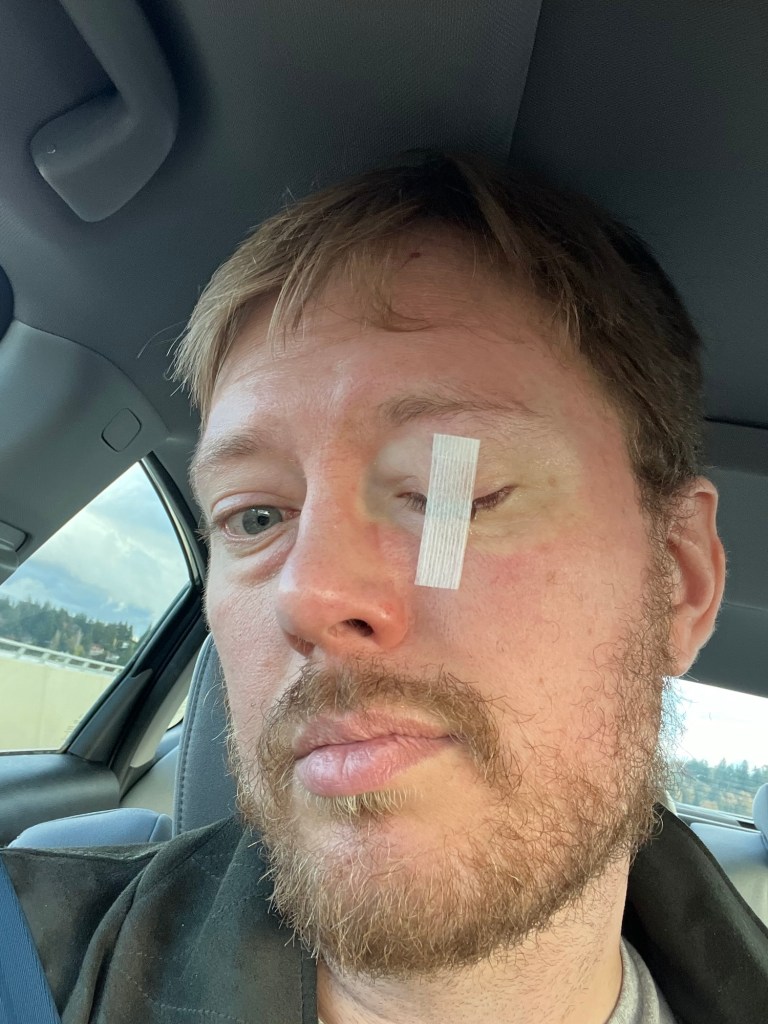




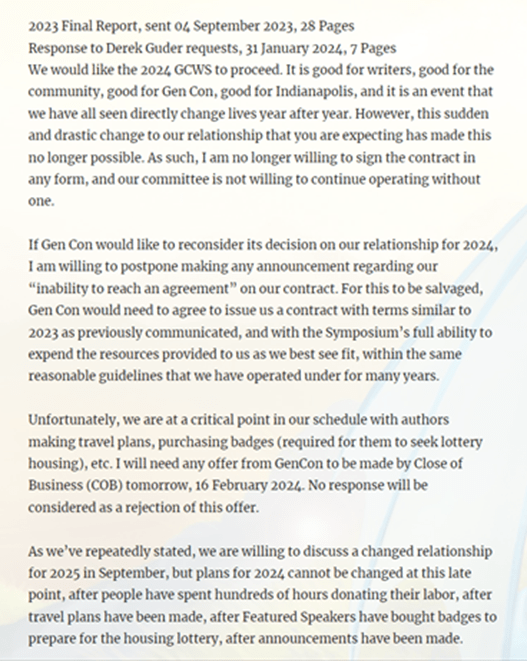
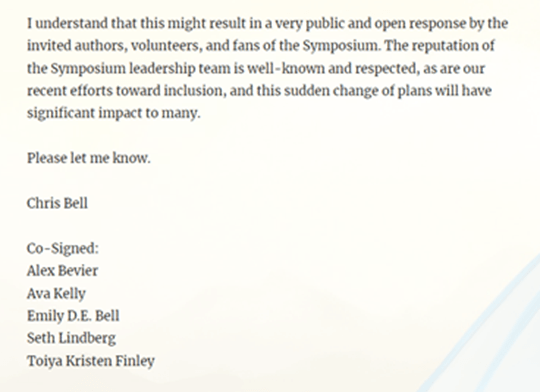


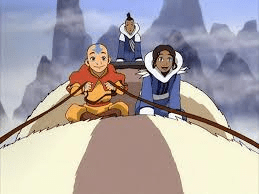


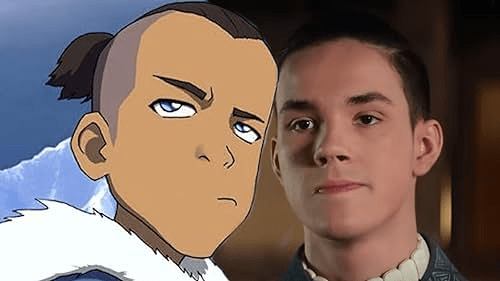


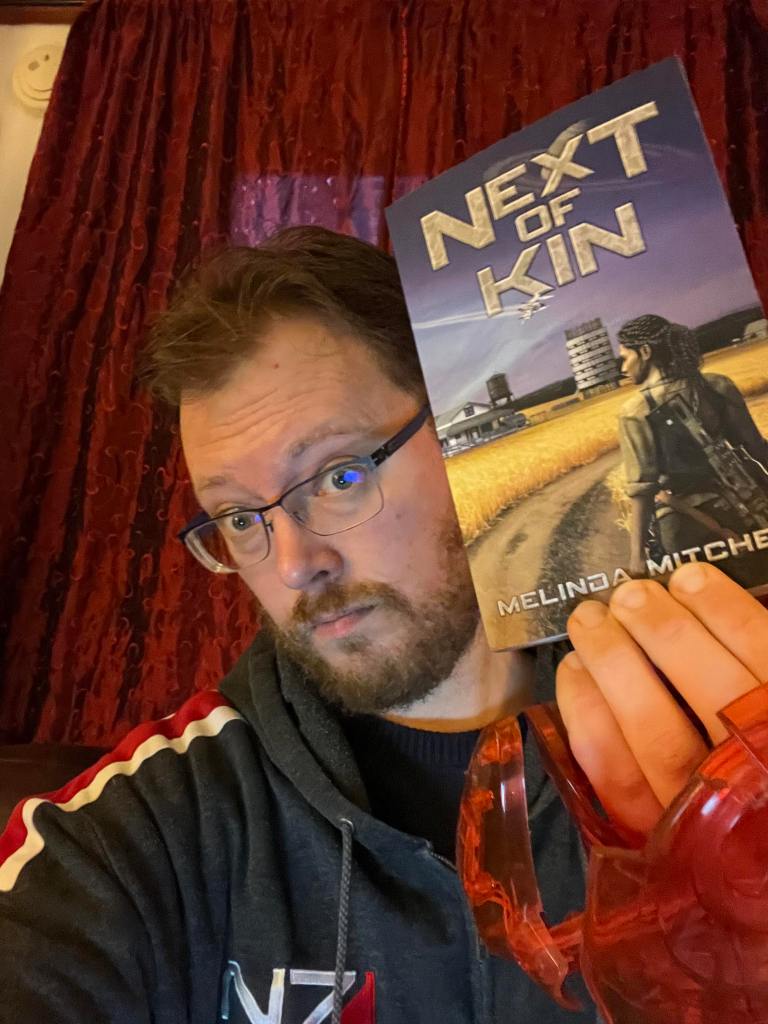

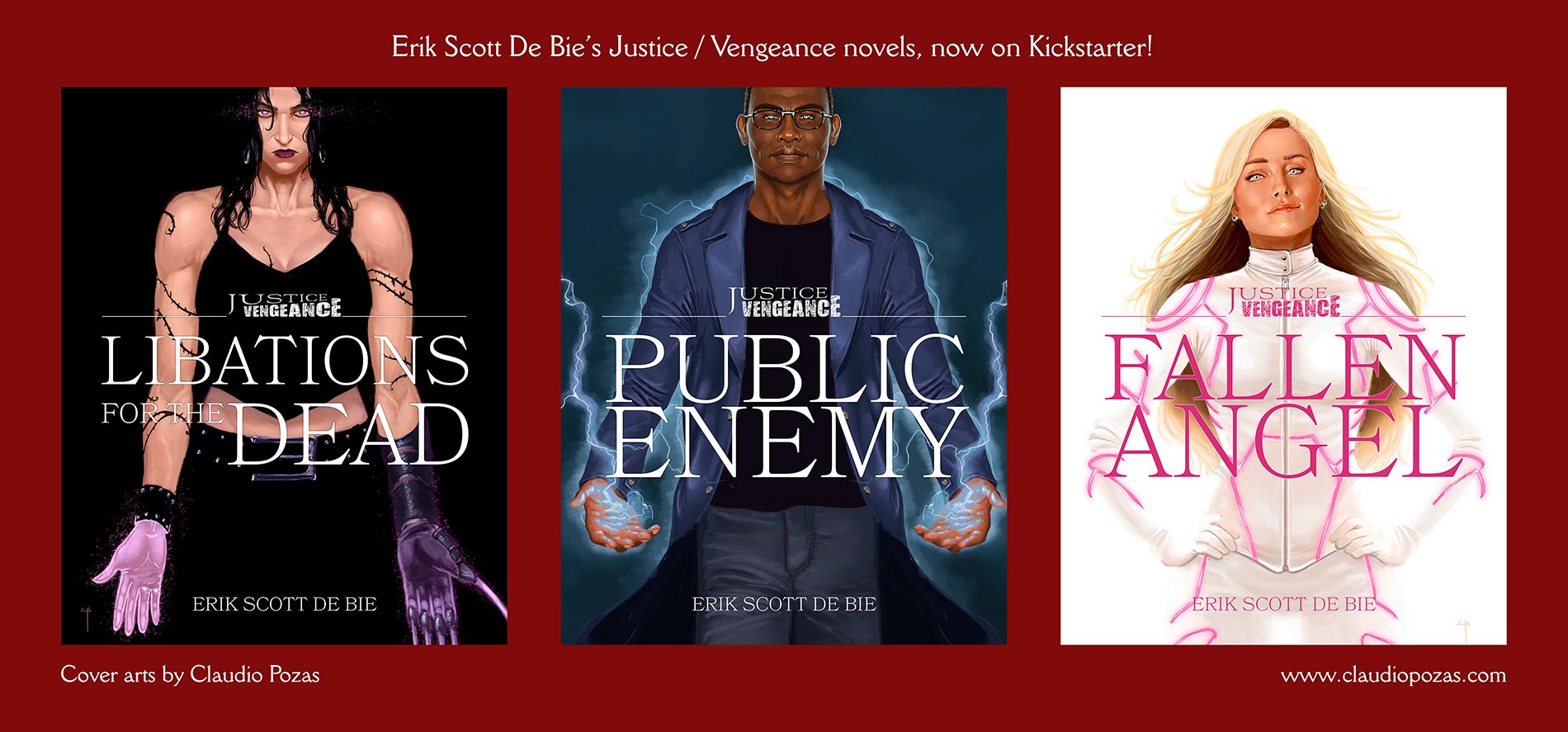
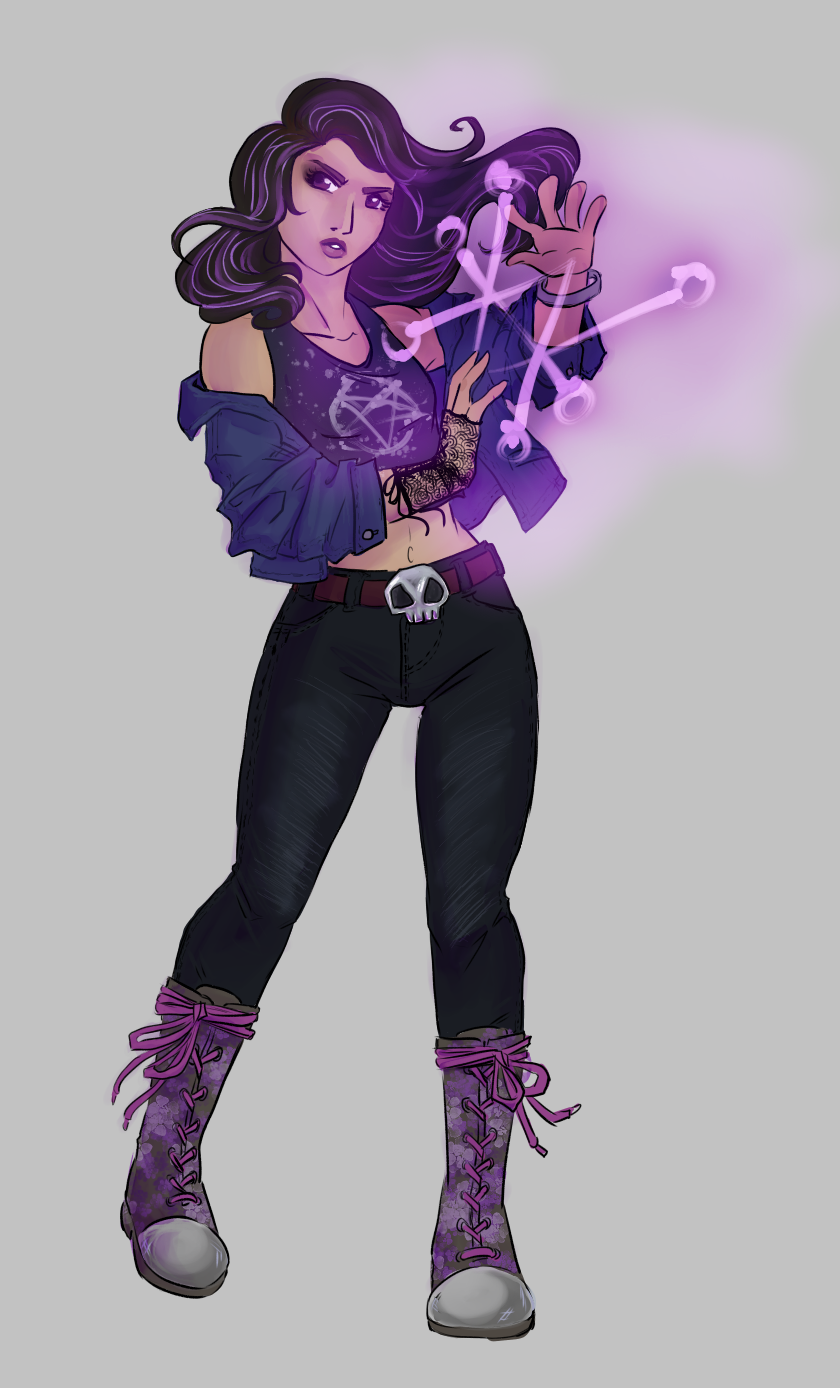

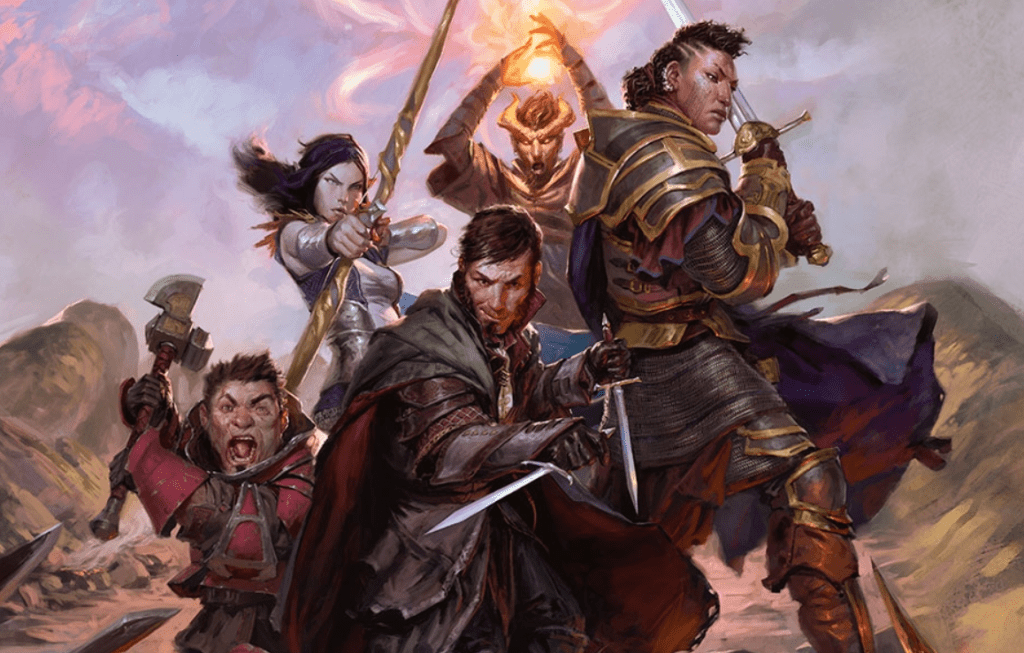


 Worldswalker