Here’s where to find me at GenCon 2017!

I’m doing some things at GenCon.
Here’s where to find me at GenCon 2017!

I’m doing some things at GenCon.
So, it’s 2017, and by my count, you’d have to have ignored a LOT of movies, comics, books, and culture to identify with white supremacists/nationalists, the KKK, or nazis in this day and age. (Or maybe rooted for the villains? I dunno.)
(Really, fake geek boys?)
Here’s an expansive but by no means exhaustive list of the media that show Nazis and their ilk as bad guys.
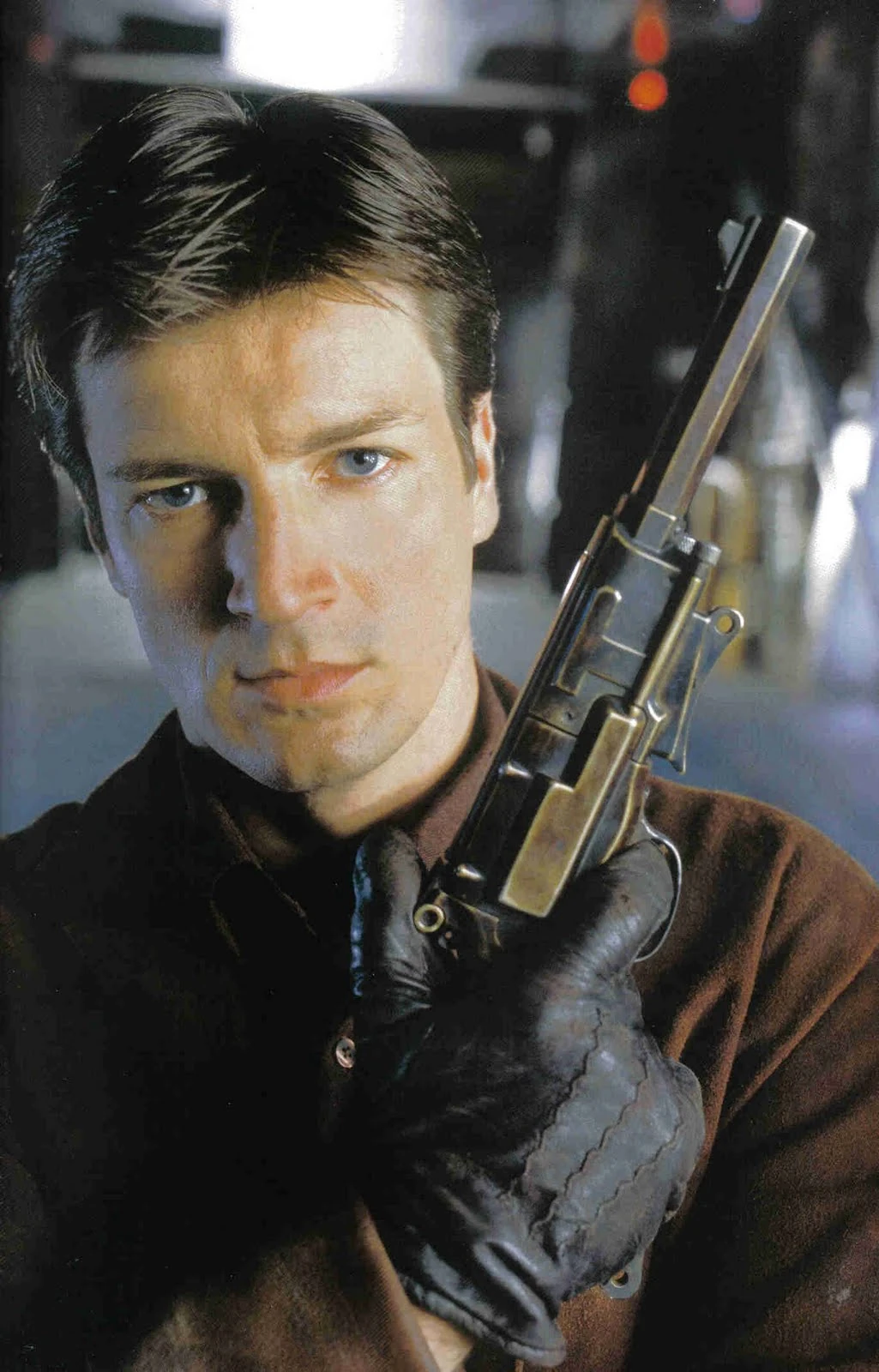
Indiana Jones (Nazis)

It’s the American way, really.
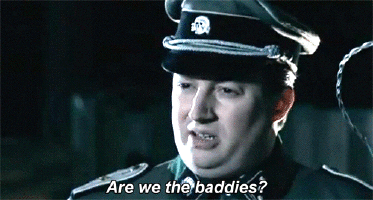
Star Wars (Empire = Space Nazis)

“Psst, FU123–are we the baddies?”
Harry Potter (Death Eaters = Magic Nazis)

The metaphor is fairly thick here, guys.
Marvel Comics (Hydra = Comics Nazis)
Even the Joker gets it, Nick Spencer–what’s your excuse?
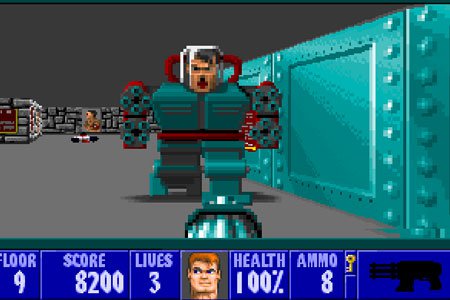
Wolfenstein (Digital Nazis)

Umm… is that ROBO-HITLER? It… it is.
Inglourious Basterds (Nazis)

Dude, alt-right–it’s your hero, Tyler Durden.
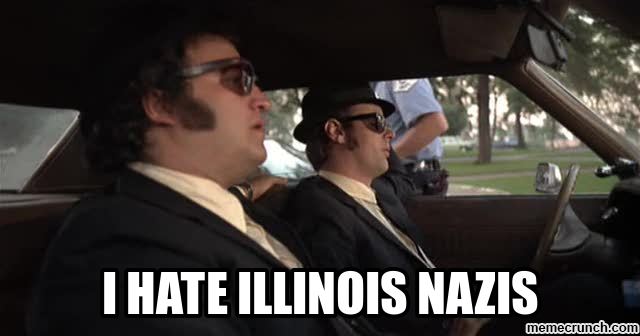
Blues Brothers (Illinois Nazis)

They’re on a mission from GOD.
Call of Duty (Regular Nazis & Zombie Nazis)

I’m gonna take a wild guess that you’re not playing a SS officer in this game.
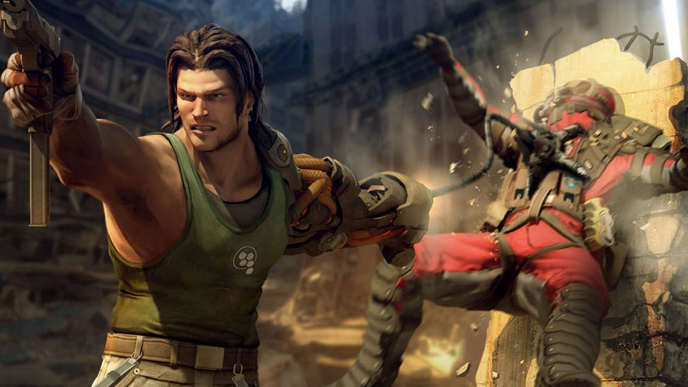
Bionic Commando (Nazis)
The original was probably better, honestly, but still.
Bloodrayne (Bloodsack Nazis)

You’re a hot redhead vampire who kills Nazis. I mean, c’mon.
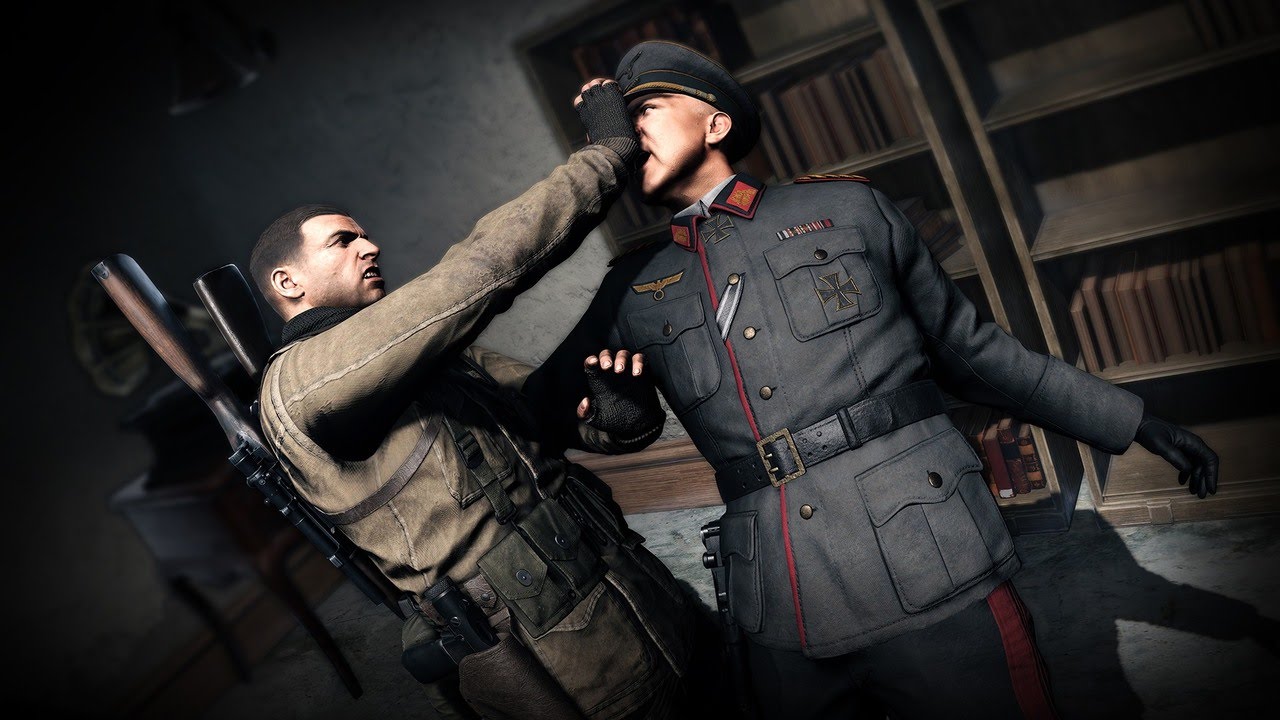
Sniper Elite 4 (and the previous Sniper Elite games) (Nazis)

Hitler is even a target sometimes.
Far Cry 5 (White Nationalists)
In case it’s at all unclear–white nationalists are the bad guys.
2018 Midterm Elections (Steve Bannon and a bunch of White Nationalists in the GOP)

Give Bannon a sad. Vote vs. GOP.
What are some of YOUR favorite Nazi/White Supremacist/Nationalist crushing narratives?
Share early, share often!
Further Reading:
The Alt-Right has a problem with Nazis as video game baddies I WONDER WHY THAT IS
THE LIST GOES ON: The AV Club’s List of Games about Nazis as Baddies
King Arthur. Aragorn the Ranger. Joan of Arc. The Twelve Peers of Charlemagne. These are paladins—knights sworn to uphold a particular cause, holy warriors devoted to a deity or virtue, and the shiniest of shiny knights.
In D&D and other fantasy RPGs, paladins tend to be a hybrid warrior/priest class. Big swords, thick armor, loud boasts about good and justice. All that sort of thing.
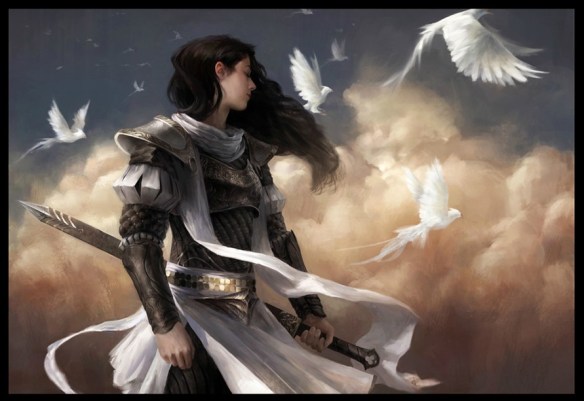
Look at that posture. Clearly a paladin.
ABILITIES
Throughout the editions of D&D, paladins have been defined by:
1) Their divine abilities, which are similar but not quite the same as those of clerics. They tend to have a much more specific, restricted spell list. Paladins tend to be more specialized as healers (lay on hands, cure disease, etc). Sometimes they’ve been able to turn undead, sometimes not. 5e has made an effort to create paladins of distinct types, which has been largely effective (see archetypes, below).
2) Their fighting ability, which is higher than that of a cleric but not as high as that of a pure fighter. In 2e, paladins had full attack progression (better than clerics) but couldn’t specialize in weapons (as fighters could). Paladins are typically considered front-line fighters and off-role support, as their magical abilities aren’t quite up to being a dedicated support caster, let alone a designated controller.
3) Their smite ability, which has taken on various forms throughout the editions. In early editions, it was a limited # of times per day to gain a bonus to attack an “evil” creature. 3e broke it into more specific smites (smiting evil, smiting chaos, etc), and then 4e turned the smites into various encounter/daily abilities that could be used on any target (going along with the graying out of the alignment system). 5e has paladins sacrifice spell slots to cause additional damage on a smiting attack (any target), and paladins can also cast specific smite spells for specific effects.
4) A strict code of conduct…

So Lawful Good I ride a UNICORN, n00bs! (art by sandara.deviantart.com)
TO GOOD LAWFULLY OR NOT TO LAWFULLY GOOD
In the earliest editions of the game, paladins had to follow a very specific, very restrictive code of conduct and alignment. They had to be lawful good. They had to vow to support charity and smite evil and defend the weak and helpless and, well, be lawful good. And depending on how draconian your DM felt like being at the time, if you stopped being lawful good for as little as ONE SECOND–if you took one wrong step or did one wrong thing–then BAM, all those fancy paladin powers were out the window. You might be able to atone with a quest (story hook, anyone?) or you might just be a mediocre fighter for the rest of your gaming life. (Sucks about all those missing feats, brah.)
And as long as people have played with Truth, Justice, and the Faerunian Way sorts of Paladins, gamers have loved the concept of the EVIL paladin. The anti-paladin. The blackguard. The chaos paladin. The dark paladin. The death knight.
Some of them used to be paladins, and lore abounds with this “fall from grace” sort of story: paladins who made a mistake that cost them their powers, and they became twisted champions of evil. Lord Soth from Ravenloft, Scyllua Darkhope from the Forgotten Realms, Anakin Skywalker/Darth Vader from Star Wars. (Um, spoiler alert.)
Some, however, were always evil—were anointed by a dark god or swore their service to a foul depravity, rather than a virtue. And so was born the concept of the blackguard. The blackguard was a prestige class in 3e, which was mechanically similar to a paladin but evil—all their powers reveled in darkness, rather than good. 4e removed the alignment restrictions altogether, so you could play a paladin of any alignment—a holy warrior sworn to any cause—and produced the blackguard base class. 5e also has no alignment restrictions.

Lord Soth, for when Lawful Good just isn’t LAWFUL enough…
ARCHETYPES
At first, when D&D was young, the “knight in shining armor” sort of paladin was your only option. You had high strength, decent wisdom, and a punishingly high charisma requirement (2e required you to have a charisma of 17 to play a paladin). And then your character was basically a shining example to the world. Many people played paladins like self-righteous jerks who eventually crossed the rest of the party ,but a paladin doesn’t have to be that, even while being lawful good (see my post about Lawful alignments for more on this subject).
3e broadened the paladin’s horizons with an official blackguard prestige class, which is mechanically linked with paladins (basically, they have almost identical abilities, but themed for causing harm and evil, rather than healing wounds and good, down to a Smite Good ability). The rogue/paladin Shadowbane Inquisitor (ahem, gee, wonder if *that* was a coincidence) prestige class from Complete Adventurer also showed us that paladins could be something other than straight up fighters, while the Grey Guard from Complete Scoundrel gave gamers an avenue to bend the inflexible moral requirements of being a paladin in pursuit of a greater good.
4e allowed paladins of any alignment, allowing holy warriors of various causes, and also produced the Avenger base class, which is similar to a paladin in many ways (more like a rogue/paladin). 4e produced the Blackguard base class, which is kinda like a paladin, but different—more of a striker than a defender, an avenger rather than a protector.
5e has really delved into what a paladin could be other than the knight in shining armor and the dark champion of villainy. You can certainly play the classic, protector, valorous paladin, or you can play the paladin whose powers come from the land and who has sworn oaths to protect the ways of the ancients, or you can play a gritty, obsessed with vengeance upon their enemies sort of paladin. The archetype system in 5e is really a powerful tool for both mechanical and roleplaying opportunities.

The Paladin: calm, serene, noble–can kick your ass twelve ways to Sunday.
Caveat: This is a topic that has been, is being, and will be argued for time immemorial. So YMMV, of course.
I think of “Lawful” as a pattern of behavior that is organized and relies upon rules and systems to make things work. Discipline and “the rules” are how lawful people live their lives. Lawful people tend to be methodical, rigorous in sticking to a routine, and follow a very specific pattern of how they do what they do. Sometimes this makes them predictable, though sometimes they are very adept at outside-the-box thinking that can surprise opponents. While that may seem like a fundamentally chaotic thing, it only appears that way to an outside observer: a Lawful Neutral bounty hunter’s MO, for instance, might always include finding new and innovative ways to surprise a mark.
I’m going to give examples from comics, video games, and my own books to exemplify these alignments–note that these aren’t necessarily perfect examples, as many of these characters have had countless iterations and visualizations and you can argue lots of exceptions. A lot of these characters (particularly the LN ones) have good or evil tendencies, and that’s fine. In the case of Geralt, for instance, choices you make while playing the games he’s in can push him in a good or evil direction–he isn’t strictly neutral. These characters are sentient creatures who aren’t uniform in their behavior. Alignment isn’t a straight-jacket–it’s a general tool for describing behavior and outlook.
Lawful Good
A Lawful Good person believes in law and order being tools for the benefit of all, and will follow the laws of the land so long as the higher ideal of justice is served. A Lawful Good person has a strong sense of compassion and prioritizes helping those in need, even if it’s dangerous to do so. They are often extremely driven people, unable to tolerate injustice or stand by and do nothing.
Lawful Good types will be extremely uncomfortable with the very concept of bending the rules, much less breaking them, even if it’s for the greater good, in a way that a Neutral Good person would not mind as much, while a Chaotic Good person would advocate for breaking oppressive rules as the best course.

Superman, Defender of Truth, Justice, and the American Way
Examples: Superman is Lawful Good. Obi-Wan Kenobi is Lawful Good. Daredevil is Lawful Good. Triss Merrigold is Lawful Good. Kalen “Shadowbane” Dren is Lawful Good.
Lawful Neutral
A Lawful Neutral person believes in law and order for their own sake, basically “those are the rules and we should obey them because they’re the rules.” This doesn’t necessarily mean that a LN person always obeys the laws of the land they’re in, particularly as a traveler, but they always have a set of strictures or a code that they follow to the letter, and generally they default to a basic respect for the laws of the land, as in “those are the rules that others follow, and they follow them for a reason.” They are often thought of as mercenary or “just following orders” types.
There is a hierarchy of rules: a Lawful Neutral person will only violate an existing law if it comes in conflict with a more important law, and then usually with great discomfort. They may or may not put on the appearance of being good and are sometimes described as being amoral or unfeeling (which is sometimes accurate).
A True Neutral person doesn’t cleave to the law in this way, while a Chaotic Neutral person may have similar priorities to a Lawful Neutral person (getting paid to do a job, for instance) but goes about it totally differently, ignoring or violating rules and expectations as a matter of course.

Geralt of Rivia, Witcher
Examples: The Punisher is Lawful Neutral. Mace Windu is Lawful Neutral. Dexter Morgan is Lawful Neutral. Gerald of Rivia is Lawful Neutral. Levia Shadewalker (Shadowbane 3) is Lawful Neutral.
Lawful Evil
A Lawful Evil person believes in law and order as a means for securing their own power and dominance. The rules are important, primarily because they can be exploited to disadvantage others. A Lawful Evil traveler pays only lip service to the laws of the land that conflict with their own personal code and set of strictures, and will ignore those laws they consider to be weaker than their own or worthless. A Lawful Evil person seeks power through organization and alliance, relying upon others to provide them the support they need to achieve their goals, which involve crushing their rivals.
Neutral Evil people may take advantage of laws but don’t feel much compunction about violating them or working outside them at the drop of a hat, while Chaotic Evil people usually revel in defying laws and rules and will gleefully shirk them whenever possible.

Darth Vader, Dark Lord of the Sith
Examples: Lex Luthor is Lawful Evil. Two-Face is Lawful Evil. Ra’s Al Ghul and his daughter Talia are Lawful Evil. The Red Skull is Lawful Evil. Doctor Doom is Lawful Evil. Darth Vader is Lawful Evil. Vengeance (from Shadowbane 3) is Lawful Evil.

Spoiler Alert: Wonder Woman is Wonderful

He spends a lot of the movie looking at her like “aw geez, man, she so wonderful.”
(Not that they can get birth control very readily, because the pols are up there making it illegal or making health care not cover it. So that’s great.)
It destroys lives.
Here is my schedule for Norwescon 2017!

Easily downloadable version here!
THURSDAY
Make A Villain – Fantasy Edition – 9:00pm – 10:00pm @ Cascade 3&4
G.R. Theron (M), Crystal Connor, Erik Scott de Bie, Esther Jones, Frog Jones
Join our panelists as they work with the audience to create a relatable, compelling antagonist.
FRIDAY
Let’s Build a Dungeon – 5:00pm – 6:00pm @ Cascade 9
Ogre Whiteside (M), Dylan Templar, Erik Scott de Bie, Ann Shilling
A dungeon? Of course! Where else are we going to put all the fiendish monsters and devious traps? I don’t have anywhere else to put all these chests and this huge family of mimics that looks like chests, do you? Join the panelists and other audience members in what’s sure to be the creation of one of the most bizarre dungeons of all time. It takes a committee to really make a monstrosity, right?
SATURDAY
Toxic Masculinity as Villain – 2 to 3 pm @ Cascade 11
Joseph Brassey (M), Erik Scott de Bie, Elliott Kay, Marta Murvosh
Masculine tropes are commonly used in the depiction of heroes, but toxic masculinity is increasingly being explored as well. What is toxic masculinity, and how does it lend itself to the writing of villainy and evil?
SF/Fantasy Battle Royale! – 3 to 4 pm @ Evergreen 3-4
Matt Youngmark (M), Erik Scott de Bie, K.M. Alexander, Jason Bourget
Who would win in a fight? A fast-paced, bracket-style, breathtakingly unscientific showdown to determine this year’s Ultimate Fictional Champion. Ready… Fight!
Comic RPG Smackdown – 5:00pm – 6:00pm @ Cascade 5&6
Spencer Ellsworth (M), Erik Scott de Bie, Matt Youngmark, Adia
Bring your favorite comic characters in mind, and our crack team of comic know-it-alls will develop stats for them to battle it out in an RPG Comics Smackdown to End All Smackdowns!
Why Do Villains Look Like That? – 6:00pm – 7:00pm @ Cascade 5&6
Julie McGalliard (M), Jeremy Zimmerman, Jaym Gates, Erik Scott de Bie
Is there a reason that, when they become bad guys, characters like Loki and the Riddler seem to be drawn smaller, more slender, and dare I say, more fey? Why do we use stereotypically feminine traits to code for villainy in comics?
Reading: Erik Scott de Bie – 9:30pm – 10:00pm @ Cascade 2
Erik Scott de Bie (M)
I’ll be reading from MASK OF THE BLOOD QUEEN and/or my forthcoming Stormtalons novel!
SUNDAY
Genre TV is Everywhere! – 11:00am – 12:00pm @ Cascade 10
David Fooden (M), Ogre Whiteside, Donna Prior, Erik Scott de Bie
With so many shows on TV and streaming networks, what should you be watching? Let’s discuss what’s currently on your TV, computer or portable device.
Tabletop RPGs: What’s a Story Game? – 3:00pm – 4:00pm @ Cascade 7&8
Ogre Whiteside (M), Jeremy Zimmerman, Scott Hamilton, Erik Scott de Bie
Just like what it sounds like! We’re talking about games long on story, shorter on mechanics.
So I finished IRON FIST.
A lot of people don’t like this show, and for a number of good reasons. A lot of people *do* like this show, and for understandable reasons.
What needs to be remembered here is that 1) You like what you like, and that’s ok, no matter what the content, 2) criticism of something you like is not a personal attack on you, and 3) we can criticize elements of things and still like them. Being a fan of something does not require fanaticism–not anymore, anyway–and you don’t have to assert that something is 100% amazing or it’s 100% crap. One is allowed to take a nuanced stance.
Art is subjective. If anyone tries to tell you otherwise–usually as a prelude to shaming you for liking something you did, or for not liking something they think is objectively awesome–don’t listen. You don’t need that kind of negativity in your life.
If you liked IRON FIST, great–I’m happy for you. I’m jealous, in fact, as I would have loved to have a 100% positive experience with the show.
(And this review will contain spoilers, because hey, finally something happened, and I’ve gotta talk about it.)
OVERALL
Generally speaking, this show was hit-or-miss for me.
It had a number of flaws, was somewhat entertaining, and could have been a lot better. I’ve seen a number of suggestions that production was rushed, and it feels that way. Early draft writing that didn’t see a lot of development. Disconnected ideas. Plot lines that don’t really go anywhere (maybe Bakudo is a set-up for the Defenders?). Very limited flashbacks that don’t tell us much about K’un-Lun. Superficial characterizations. Danny is always right, Colleen is almost always wrong, etc.
Don’t get me wrong–there are things I enjoyed about this show. But mostly it felt like a meandering mish-mash of other Marvel shows that never really broke out into its own thing.
THEME
Overall, IRON FIST could never quite decide what it wanted to talk about, and the result was a little bit of a jumble. LUKE CAGE was definitely about racial tensions and the intersection between identity and politics. JESSICA JONES was definitely about trauma, relationship violence, and PTSD. DAREDEVIL was mostly about guilt: survivor’s guilt, catholic guilt, guilt about acts of commission and omission, etc. And all of those are very true to those character from the comics. At their best, that’s the power of those characters, and they deliver memorable stories about those themes on the page.
Iron Fist, on the other hand? This show never spent enough time on any given theme to do it justice.
Was it about conflicting cult mentalities? The show brought this up a couple times, particularly when Bakuto and even Colleen Wing tried to convince Danny that Kun-Lun had brainwashed him into believing something about another group that wasn’t true, but it turned out to be true almost immediately, vindicating Danny’s cult upbringing. (It is yet another example of “Danny right, Colleen wrong,” which this show does a lot.) Yes, the monks were a cult in some way, but they seem to be 100% correct in their beliefs and aims. It’s not generally ambiguous: they were right Danny’s apparent destiny, they were right about the Hand, they were right about the need to defend the pass, etc. *Maybe* their insistence that Danny kill people without regard for morality is pushing it, but frankly, every time Danny doesn’t fulfill his mission to *destroy the Hand,* it gets worse for him. If the writers were trying to talk about the danger of cults, they didn’t take enough risks or really delve into the subject to say something lasting. (Not like THE PATH, for instance, a Hulu exclusive you should absolutely check out.)
Is IRON FIST about mental instability? There’s certainly a lot of time spent in mental institutions and we see gaslighting and other manipulative tactics from several of the characters. But again, I don’t think they go in depth enough to warrant this. Ward’s descent into madness, paralleling Danny’s misadventures with mental treatment, seems like it will be a major arc for him, but it doesn’t get a lot of resolution (other than Ward using a gun on the source of most of his problems, which didn’t work out so well when he did it before with a knife). I don’t know, this felt like a minor plot element, hardly treated all that seriously by the writing.
Is IRON FIST about PTSD? Sure, that comes up periodically, but after JESSICA JONES handled it so primarily and brilliantly–after a show saturated in trauma and regret and pain and coping–the short shrift it gets in IRON FIST seems like way too little, and way too redundant. It dabbles unsuccessfully and doesn’t earn this as a narrative hook. I guess there had to be *something* to keep Danny grounded, as he doesn’t seem to suffer all that much. Occasionally circumstances conspire against him, but he always punches his way out eventually. He suffers no lasting repercussions for his actions, and always has a safety net of friends and/or money to fall back into. There are a couple of low points–when he’s wounded escaping the Hand, for instance, or when the DEA is after him in the last episode (a really, *really* late development that was basically never explored again)–but in both those cases, he had friends to help him through, and his own righteous anger.
Anger seems to be just as important a part of this Iron Fist as the power itself, which suggests that maybe this show isn’t actually about Eastern Philosophy, either. For having spent 15 years ostensibly learning to control his emotions, Danny demonstrates a remarkable tendency to lose control and throw honest-to-Stan tantrums that his more mature friends (i.e. *all* of his friends) have to do the emotional processing to manage. He’s like a child–a literal man-child who gets frustrated and whines when he doesn’t get his way, and those around him make allowances to soothe and appease him until he calms down.
Is lack of control what K’un-Lun teaches its students? Is this what growing up among the monks gets you? Maybe it is, because we see some of that from Davos when he’s chatting with Claire. I half-expected that scene to turn into some mild flirtation, because honestly, he’s a chaste monk, but she’s Rosario Dawson. But instead, we got an insight into someone else who’d gone through K’un-Lun re-education, and he seemed just as unbalanced and seething with rage as Danny himself. This is obviously setting up Davos as a foil to Danny, but he’s used so little in the show as to seem more like an after-thought. I guess we’ll see more in season 2.
CHARACTERS AND SUB-PLOTS
Danny Rand
I’ve said a lot about Danny in the past, and it holds true through basically all of the series. Even in episodes 12 and 13, he’s whining and throwing tantrums until the other characters (usually female characters) concede to his way of thinking, and he pulls everyone down his sinkhole of grumpiness until they have to take care of him. And that’s really disappointing. I know I’ve been like that at times–by virtue of my entitle white boy upbringing–and it’s something I hate about myself. If it were played as a flaw, I’d be more intrigued about this characteristic in the show, but no, Danny essentially always gets his way after enough angsting and groaning.
I guess, what do we expect from a 10 year old raised for the next 15 years by monks who have no concept of parenting and even less interest in doing so?
An emotionally stunted man-child who never learned to deal with his emotions, except by repressing them and pretending they don’t exist.
Finn Jones said on Twitter that maybe we don’t like Danny Rand because of Donald Trump–that we don’t root for rich white guys any more. And maybe he’s partly correct. Maybe the thing we don’t like about Trump, and thus about Rand, is that he whines to get his way, and everyone just capitulates.

At least he doesn’t complain about it being cold outside.
I’d like to say this gets better, but, eh, not really. He doesn’t really do anything to address his child’s way of processing emotions. He just adds a little more sense of responsibility, when he realizes that accomplishing his purpose to “Destroy the Hand” requires him to do some things that not everyone is 100% on board with (particularly but not only murder). Unsurprisingly, Claire is the voice of reason/conscience for Danny, and kind of pulls him back from the unrestrained Id driving him to kill and destroy the Hand. (Along with a healthy meta-dose of the old “heroes don’t kill” yarn.)
And as I implied, this makes sense in the context of his upbringing, but this is one of the difficult elements of this particular story. Marvel wrote itself into a corner with Iron Fist: an entitled rich white boy goes to the east to learn martial arts, does martial arts better than all the easterners, literally appropriates a great source of power, then returns to New York to punch baddies in alleyways with it. And in the 1970s, when we were less sensitive to racial politics and everyone was super keen on kung fu movies, Marvel could get away with it without loud criticism. And there’s a significant percentage of their fanbase that 1) doesn’t get why this is a problem (“but Iron Fist was white in the comics! why wouldn’t he be in the show?” *) or 2) doesn’t care. But Marvel is now writing in a more culturally diverse, socially aware time. This was an opportunity to address this issue, and Marvel just didn’t.
(* As though they haven’t seen Much Ado about Nothing with Denzel Washington. Or the Avengers with Samuel L. Jackson. I mean, c’mon.)
OK, enough harping. Some good stuff.
Finn Jones does a decent job with the material he’s given to work with. You get the sense he really does care about the character and story, and if he’s not conflicted, exactly, he gets across the sense of rudderless, disoriented hero pretty well. He’s never really belonged in any world–not K’un Lun, not New York, and (for a while, anyway) not Colleen’s arms. He’s looking for his place in the world, and Jones acts up to that admirably.
Some of Jones’s best work comes when he’s dealing with other people’s issues/problems without trying to lecture them. When he’s earnestly expressing concern or fear for others, then his compassion shines through. If and when Iron Fist is to continue with season 2, the writers would do well to play up Danny’s growing sense of compassion.
I’m also hoping that his time with the Defenders is helpful for him.* Based on his comics incarnation, Luke Cage is in the best position to make Danny grow up, but Jessica Jones has a LOT to teach the kid. Specifically about how other people can be damaged by trauma and are worthy of respect and compassion. Daredevil is probably too damaged to be all that useful, but maybe Danny can garner a few insights. Talking less and listening more can only help him going forward.
(* On that note: I’ve gotta admit, I have trepidation regarding the Defenders. Danny and Luke, best friends in the comics, seem galaxies apart in the show. Luke is a grown-ass man, and he feels like an adult who has suffered through shit in his past and has managed to deal with it. Danny, on the other hand, feels more like an immature 20-something who is just now starting to experience emotional problems. How will those two fit together? Unless Danny is radically different in the Defenders . . . and is he ever going to get with Misty, the way he does in the comics? Seems unlikely, since she’s a grown woman and he’s, well, him. I don’t know, I guess we’ll see.)
The stunts–meh, it’s not the best fight choreography, but he makes a good faith effort. I’m no expert. I’ve done a fair deal of fight training and have several friends who are fighters. I’m an enthusiast. I know nothing about kung fu, really. My assessment is that the fighting in this show seems slow and plodding and not particularly stylized and made super entertaining. It looks real and efficient, if not engrossing. It’s a different type of stage fighting from what you’d expect in a more action-focused show. Whether that’s a strength or a weakness depends on what you’re looking for in your entertainment. Me? I wouldn’t mind seeing flashier and cooler kung fu in a show about a kung fu master.
Tangent: What would have been gained by making IRON FIST Asian-American?
Plenty.
I think of the way the comedian Aziz Ansari dissected and told us about being Indian-American in America in his show MASTER OF NONE. Which was fascinating and compelling.
IRON FIST could have been that for comic books–about an Asian-American boy far removed from his cultural heritage who has to struggle with the feelings of isolation and uncertainty that come with having that identity in America. This fourth or fifth generation Chinese-American Danny Rand feels unconnected to his culture, and then he gets suddenly dunked in K’un-Lun, where he grows up for 15 years, learning a different way, and heads back to New York, where he’s just as much an outsider as he was before. He doesn’t really belong anywhere.
You get the same story we currently have with Danny Rand (the eternal outsider), but you add that whole element from the perspective of an Asian-American person: a group that all too often grows up with feelings of being perpetual outsiders in their own home.
That would have carried the same level of powerful commentary as JJ and LC, and it would have held true to the themes of the comics IF whilst also addressing the problematic orientalism embedded in the story during a time when Marvel didn’t know any better. This show could have taught us something or at least made us think about something not in our common experience.
(Who would they have cast? I don’t know–Lewis Tan, maybe?)
So much potential, but Marvel took the safe, boring option. Alas.
And maybe–MAYBE–if the white audience currently being pandered to by IRON FIST used the character to see what being an outsider in your own home felt like, that would be something. A silver lining and purpose behind a white Danny Rand, but I don’t think we get that from this show. He may suffer a few inconveniences, but essentially his handsome pale visage gets him through it all, even if he couldn’t talk or charm his way out of a paper bag. That’s white privilege staring us in the face, but as usual, we don’t see it.
Colleen Wing
She remains pretty much as cool as she seemed at first, though she loses a little of her luster when she falls under the spell of the IRON FIST. (Ahem. Euphemism.) Basically, after her inexplicable attraction to Danny Rand puts them in bed together, she either immediately or eventually sublimates all her own impulses to pave his way. She compromises her standing with her chosen family (the Hand, which turns out to be as awful as Danny told her it would be), doesn’t kill Bakuto (she’s very ambivalent about it), and essentially devotes all her time and energy to fulfilling Danny’s quests and interests. I mean, I know he’s the hero and all, and the plot requires you to be his unflinching support, but c’mon, Colleen. Take a night out for yourself. Go hang out with Misty and do some Daughters of the Dragon thing.

And when you go fight crime, please wear the white suit, Colleen. 🙂
The show attempted to do something about this by outing Wing as a member of the Hand (the ostensibly softer, gentler Hand that was all about empowering people to get them off the streets and infiltrate them into hospitals and mayoral offices and… oh shit, evil!), and thus taking away a pillar of Danny’s support, but he doesn’t stay angry at her for very long, because she helps him almost immediately. There’s no showdown between them–no physical confrontation filled with pathos and hurt feelings. (And wouldn’t that have been cool? Colleen Wing vs. Danny Rand? But I digress.)
The Colleen Wing of the show has the same sort of moral distance (geek alert: true neutral? maybe) she seems to have in the comics, which is great. But the writing makes her too infatuated with Danny Rand, and for no real reason. It honestly would have made more sense–and made their eventual reconciliation more powerful–if the Hand had instructed her to seduce Danny and she’d come to develop real feelings for him and regret her actions. But no, instead the show expects us to believe she wanted the Iron Fist before she realized it was the Iron Fist because . . . why? (Maybe it was the hair.)
Anyway, despite this weakness in the plot, Colleen Wing remains one of the best elements of Iron Fist, and her arc about being true to herself persists throughout the show. I think she ends up in a pretty good place, even if her climactic showdown with Bakuto isn’t entirely resolved. (And I’m so glad she got to fight that guy at least mostly on her own.)
I mean, I wouldn’t have minded seeing her dye her hair red and wear the white jumpsuit more, but this was a pretty true and cool interpretation of the character from the comics.
(More about how Colleen Wing is the Hero Iron Fist Deserves)
Claire Temple
Thank STAN this woman is in the show. She is the moral center and the voice of reason, and she also provides some much needed levity. I’ve noticed she tends to take a much larger role in these shows as time goes on, having appeared in just a few episodes of Daredevil Season 1, like 2 episodes of Jessica Jones, and then a few of Luke Cage, etc. As of Iron Fist, she’s a major supporting character, and the series benefits from her presence.

REALLY, guys? Seriously? Let’s think this through just a little bit.
In many respects, she’s also the voice of the audience. She’s the one who will get in Danny’s face and say “slow down, think this through,” etc, and she is basically the only reason he doesn’t get arrested, shot, accosted, or otherwise fail his mission half a dozen times in the course of the show. And does she get thanked for her efforts? Well, the show doesn’t kill her, so I guess that’s a thank you in and of itself. And Danny *does* get around to being appreciative–eventually. (And at least there’s no romantic connection between Claire and Danny. That’d be a little much after her fling with Daredevil and near-tryst with Luke Cage.)
I’m also glad and intrigued to see her sharpening some fighting skills. The clawed gloves are a nice touch. A friend suggested to me that Marvel-Netflix might be pointing her down a path to become White Tiger, which is an interesting concept that bears further consideration.
The Meachums: Harold, Ward, and Joy
The writing seemed to do pretty great with these three characters, and even if their arcs weren’t perfect, they were solid.
Regarding the patriarch of the family, David Wenham is very well cast as Harold. (Faramir as a villain? Sure!) He does an admirable job throughout the series as a morally ambiguous manipulator with serious rage issues. Which only get worse every time he dies and comes back (long story). He plays the role with such palpable menace, oozing anxiety producing pheromones that set everyone around him on edge. Watching him keep all that darkness seething just below the surface–outrage born of undeserved power, moral turpitude, and trauma–makes Harold an excellent bad guy. He might show up on camera a little too much for my personal tastes: I’m not sure I want to see him humanized as much as he is.
That said, I don’t think his portrayal quite matches up with D’onfrio’s Kingpin or Tennant’s Killgrave. I think of the episodes about Wilson Fisk staring at the mostly white wall and listening to the symphony coupled with flashbacks to his childhood, or sociopath Killgrave’s struggles with what emotions are supposed to be like, and I shiver. Harold didn’t have a stand-out scene like that, at least for me. He’s just a superficially charming bully from the beginning, and he remains that way.
The most poignant part of his story is when Danny accuses him of destroying both his (Danny’s) family and his own (Harold’s), because Danny is absolutely right: Harold is a victim of toxic masculinity, the way so many men are. He has poisoned his own family by attempting to sculpt it the only way he can: through violence against his son and invalidating his daughter. He beats Ward to “toughen him up” and casually keeps Joy at arms-length “for her own good” and is extremely controlling of her actions and invalidates her agency at every turn, treating her like some sort of doll. I believe he genuinely loves both of his children the only way he knows how, which is destructive to both of them.
Ward is a victim of his father, who was in turn victimized by his own father. The cycle of violence continues, with Ward bullying Danny for no better reason than that’s what he went through. And with Ward, we see the devastating consequences: it has driven him to drink and pills, and plays a significant part in his mental instability. (See themes, above.) I started off the show with zero sympathy for Ward and finished it with about 20% sympathy for him. He’s still a raging asshole, but at least you get a sense of why he is the way he is (at least part way). Even toward the end, I wasn’t sure if he was doing the right thing because he had an awakening and realized it was the right thing to do, or he was still trying to manipulate Danny. He just needed more story to fulfill–shooting his abusive father off a building is not a satisfactory resolution to his story. Maybe we’ll see more in Season 2.
I was pleased to see Joy‘s evolution toward an antagonist. She started off the show as tentatively and hesitantly going along with her brother, but she had a front-row seat to his self-destruction and reacted very much against that. Instead, she reached out and grabbed what she really wanted, and I can’t fault her for that one bit. Things came to a head when Ward betrayed her and got her shot, and then she didn’t accept his apology or let him back into her good graces. (I wouldn’t have either.) And fortunately, she didn’t get enough time with Harold to see him for the monster he had become–just a few glimpses here and there, which may or may not haunt her going forward. I’m expecting good things from her in the future.
OTHER CHARACTERS
I was actually somewhat intrigued about Davos. As I’ve said before, I know the comics only in a very limited scope, but so far Davos seems true to what I expect. He has a certain Baron Mordo quality to him–an indirect antagonist acting out of something like jealousy buried in righteous indignation. He’ll be a bigger deal in Season 2.
Bakuto I hated from the minute he showed up (and Wing basically calls him “bae,” which was a little unsettling), and I kept hating his smarm until he dies (kind of). That’s not to say I didn’t think he was an effective villain–quite the opposite. I think the show didn’t give him enough time to be a significant force, but I’m sure we’ll see him again.
Always good to see Carrie-Anne Moss as Jeri Hogarth, and she had some legitimate warmth and humor in this show. I’d like to see her more in these shows, rather than just as a small cameo.
Madame Gao really came into her own in this series. She’s been a lurking, sinister presence in other series, but she lent some gravitas and genuine menace to IRON FIST. And I’m glad they didn’t wrap her up as a character. She’ll definitely be back.
THE ENDING
Ok, so I’m very glad it ended the way it did, with *something* happening to K’un-Lun and it being kind of Danny’s fault for not being there to guard it. *Finally* he has no choice but to be accountable for his mistakes. And it leaves this intriguing plot hook.
We’d probably have cared more about the mystic city if we’d seen more of it, but I wonder if Marvel was operating under too strict budget and time constraints for that to happen. Maybe next season.
OVERALL
I’m not going to condemn this show or advise anyone not to watch it. In fact, quite the opposite: you should check it out. You might like it, and that’s perfectly ok. Or you might turn it off after a few episodes, and that’s perfectly understandable.
At times frustrating, at times boring, punctuated by quick bursts of action and some goofy dialogue, IRON FIST is the weakest of the Marvel Netflix shows. But that still places it at a cut above a LOT of SFF TV out there, including a lot of superhero fare. If Arrow is too depressing for you, for instance, IRON FIST might scratch that itch.
It’s worth a watch.
Cheers,
Erik
Further Reading:
Marvel: “Hey fanboys, are you socially awkward and don’t care about women’s feelings or autonomy? It’s ok, they’ll sleep with you anyway!”
Fanboys: “Yay!”
. . .
I’m to that point in Iron Fist (spoilers for episode 7, I think) where there’s an entirely unearned sex scene coming up, and it just makes me roll my eyes so hard my head hurts.
“Unearned,” in the sense that the narrative doesn’t justify it in any way.
What about this guy is Colleen Wing supposed to be attracted to?
Is it the bad hair?
The constant disrespect for her teaching methods?
The one or two compliments that he gave her in the last couple episodes? (Compliments that came totally out of the blue, “you’re the strongest person I know,” ah, you’re an idiot, Danny Rand.)
How about the stalking?
The breaking into people’s houses?
The inability to take “no” for an answer?
The vow of celibacy that he apparently swore but discards in a HEARTBEAT as soon as there’s a sexy exotic/erotic Japanese poison woman in the previous episode? (Yeah, don’t think I missed that little gem. [1])
I get that it’s a vulnerable moment with her manufactured anxiety about failing to protect a mostly dead guy, and that Danny tells her some cute stories about little boys being doofuses, but c’mon, seriously? How are we supposed to take this seriously? They’re not Luke Cage and Jessica Jones. Heck, they’re not Matt Murdock and Elektra.
Maybe she’s just really into fake-looking chest tattoos.
Yeah, that’s probably it.

Are Colleen Wing’s initials “CW” because this is a CW show? Maybe that’s it.
If that sounds harsh, it’s because Marvel keeps digging that hole for The Great White Hope, and doesn’t seem to realize it’s digging.
Flawed people, I’m cool with–I *prefer* flawed characters, in fact–but I expect there to be narrative consequences to their flaws or an exploration of their flaws.
So far, Danny’s only “flaw” is that he’s too compassionate, refusing to kill the Hand warrior so that Madame Gao wouldn’t kill the damsel in distress. And then he angsts about that, because that’s apparently a good thing.[2]
His seeming inability to respect women or boundaries is a significant flaw, but there’s been zero sign that he’s even aware of that problem, much less that he’s going to address it. And why would he? Even the women he disparaged, disrespected, and harassed fall into his arms without any real effort on his part. No doubt Colleen and Joy will end up fighting over him, because that’s how these rich white boy wish fulfillment stories usually go.
Every episode, I like him less and less, which is pretty remarkable, considering how little I liked him initially.
Jessica Jones, for instance, was an incredibly flawed character who made all kinds of bad decisions and disrespected the hell out of basically everyone, but she suffered for it. She had to earn every ounce of good that happened to her in that show (and there wasn’t a lot of it). Her whole story was a compelling climb up a rugged mountain during a lightning storm without so much as a jacket or even boots.
Danny doesn’t struggle or suffer or have to earn anything. Sure he gets hurt on occasion, but it’s never a big deal. Everything just kinda works out for him, because it’s destiny.
And that’s a lame story.
This is a lame story.
I hope it gets better.
Cheers
Notes:
[1] The Japanese spider lady who fights with sexiness was really, REALLY bad. (Orientalism, anyone?) I mean, I want a Spider Woman show as much as the next hot blooded Marvel fanboy but c’mon.
[2] Also, can we have a conversation about how eastern philosophy is a stand-in for psychopathic disregard for innocent lives here? Maybe it’s an Objectivist thing–that in order to truly excel at your calling, you have to put petty things like morality aside. (Maybe the “Rand” part of his name isn’t a coincidence.) Maybe this is the conversation Marvel wants us to have, but that’s really weird.
(See also, Iron Fist is an Entitled White Boy Jerk, part 1.)